Character Title Generator
Create memorable titles for heroes, villains, NPCs, and original characters
How to Use Character Title Generator
Generate stronger titles in three steps
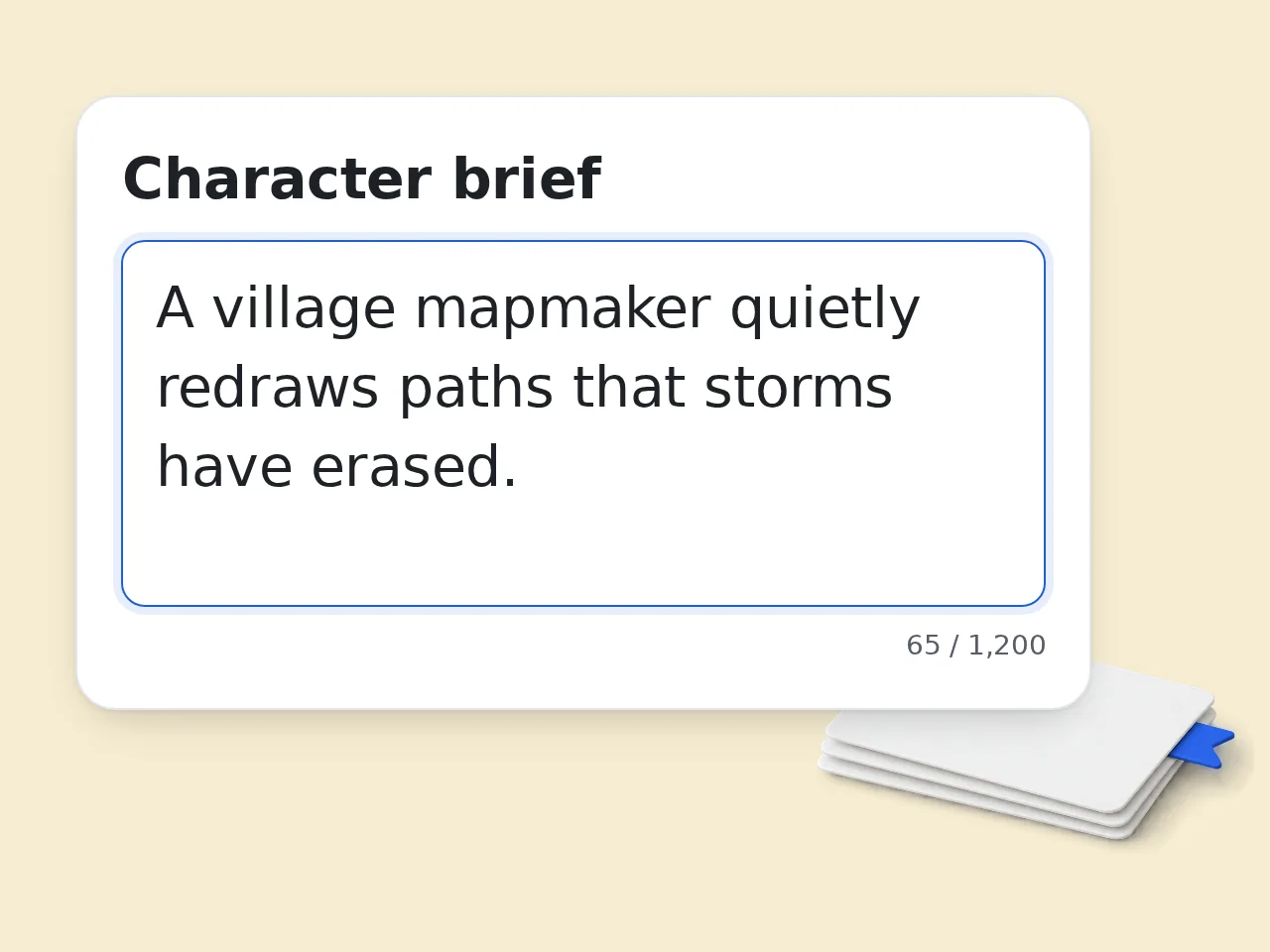
Describe the character
Include role, goal, conflict, power, personality, or any image the title should echo.
Pick genre and style
Choose the genre and title mood so the result fits your world instead of sounding generic.
Review and adapt
Compare options, keep the strongest phrasing, and revise constraints if you need a sharper result.
Character Title Generator Features
Controls built for writers and game masters
Genre-aware title ideas
Tune titles for fantasy, sci-fi, mystery, anime, romance, historical fiction, or tabletop games.
Character context control
Add backstory, powers, flaws, role, and visual motifs so every title feels attached to the character.
Usable variations
Receive polished options with different intensity levels, not only random word combinations.
Character Title Generator FAQ
Practical answers for writers, gamers, and role players
What does a character title generator do?
A character title generator turns a short character idea into title options that suggest role, reputation, power, or conflict. Instead of only mixing random nouns, it uses your genre and brief to shape titles that can sit beside a name in a story, campaign, cast list, or profile. Add a setting clue, a public reputation, and one private contradiction when you want the title to feel earned rather than pasted on. It also helps separate public reputation from private motive, which is where many stronger story titles begin.
How do I write a good character brief?
Give the character title generator concrete signals: occupation, flaw, goal, secret, setting, power source, and emotional tone. A brief such as “exiled healer hiding a royal mark” gives stronger material than “cool fantasy woman,” because the output can reflect conflict and image at once. Keep the brief concrete. A single object, scar, vow, forbidden place, or enemy often gives the generator a sharper image to build around. Add sensory detail when possible, because titles built from places, materials, weather, or rituals feel less interchangeable.
Can I use this for DnD or tabletop NPCs?
Yes. For DnD, Pathfinder, and other tabletop games, describe the NPC role, faction, threat level, and how players first meet them. The character title generator can produce tavern rumors, boss labels, noble epithets, or short introductions that help the table remember the character. For campaigns, ask for a mix of spoken rumors and formal titles. That gives you names players can hear naturally during play. You can paste the best option into session notes, then use a shorter nickname when characters speak quickly.
Will it work for villains and antiheroes?
Villains, rivals, monsters, fallen heroes, and morally gray leads all work well. Add what makes them feared or misunderstood, then choose a darker or more poetic style. The result can frame a villain without revealing every secret before the scene earns it. If the villain has a hidden motive, mention only the visible behavior. The title can create menace without spoiling the later reveal. That restraint keeps the title useful at the table or on the page instead of turning into a summary.
Can it make anime or manga character titles?
Anime and manga titles often lean into contrast, symbolism, and emotional exaggeration. Mention the character archetype, power, school, clan, or visual motif, then choose a poetic or dramatic style. You can ask for cleaner titles if the first batch feels too intense. For anime OCs, balance dramatic energy with readability. A title should sound exciting, but still be easy to say in dialogue. If you want a lighter result, ask for grounded school, guild, or slice-of-life variations in the same run.
How many title ideas should I generate?
Generate enough options to compare patterns, usually eight to twenty. A smaller batch is easier when you already know the tone. A larger batch helps when you are still exploring whether the character should sound noble, comic, ominous, romantic, or legendary. If several options share the same pattern, change the style field instead of regenerating blindly. Noble, dark, comic, and poetic modes produce different shapes. Save two contrasting favorites; one may fit the character now, while the other can fit after a major turning point.
What makes a title sound memorable?
A memorable title usually contains one strong image, one clear role, and a hint of tension. “The Ash-Crowned Healer” works better than a long stack of adjectives because readers can picture it quickly and still wonder what happened to that character. Strong titles usually leave one question open. They tell the audience enough to care, while leaving room for the scene to explain the history. This is why the tool favors images, roles, and consequences over long labels that explain everything at once.
Can I avoid cliché fantasy words?
Use the constraint field to ban words like shadow, crown, blood, chosen, or dragon. The character title generator will steer around them and look for fresher images from your brief, such as tools, weather, scars, debts, locations, habits, or private vows. The constraint field is useful for worldbuilding rules too. You can block modern words, royal language, religious terms, or anything outside your setting. Negative instructions are especially helpful for mature settings where common epic vocabulary would break the tone.
Should a title include the character name?
It depends on the use case. For a chapter heading or profile card, a title alone may be cleaner. For a cast list, pairing name and title can be useful. You can ask for both formats and keep whichever feels natural in your setting. Names and titles can be tested separately. Read them aloud together, then remove whichever part makes the line too heavy. The best test is sound: if the full phrase feels awkward aloud, shorten it before publication.
Are generated character titles safe to use?
Generated titles are meant as original brainstorming help, but you should still check important names before publishing. Avoid famous franchise phrases, trademarked terms, and titles that are too close to existing characters, especially for commercial games, books, or merchandise. Treat every output as a draft. Save the strongest ideas, then do a quick originality check before using them in a commercial release. For important projects, keep a small shortlist and review it later with fresh eyes before final selection.
Still have questions?
Contact our support teamTry the Character Title Generator Free
Turn a rough character idea into titles that feel ready for a story, campaign, or profile.