Academic Dishonesty Checker
Check whether your action counts as academic dishonesty — with clear definitions and consequence breakdowns
How to Use the Academic Dishonesty Checker
Three simple steps to check your academic conduct
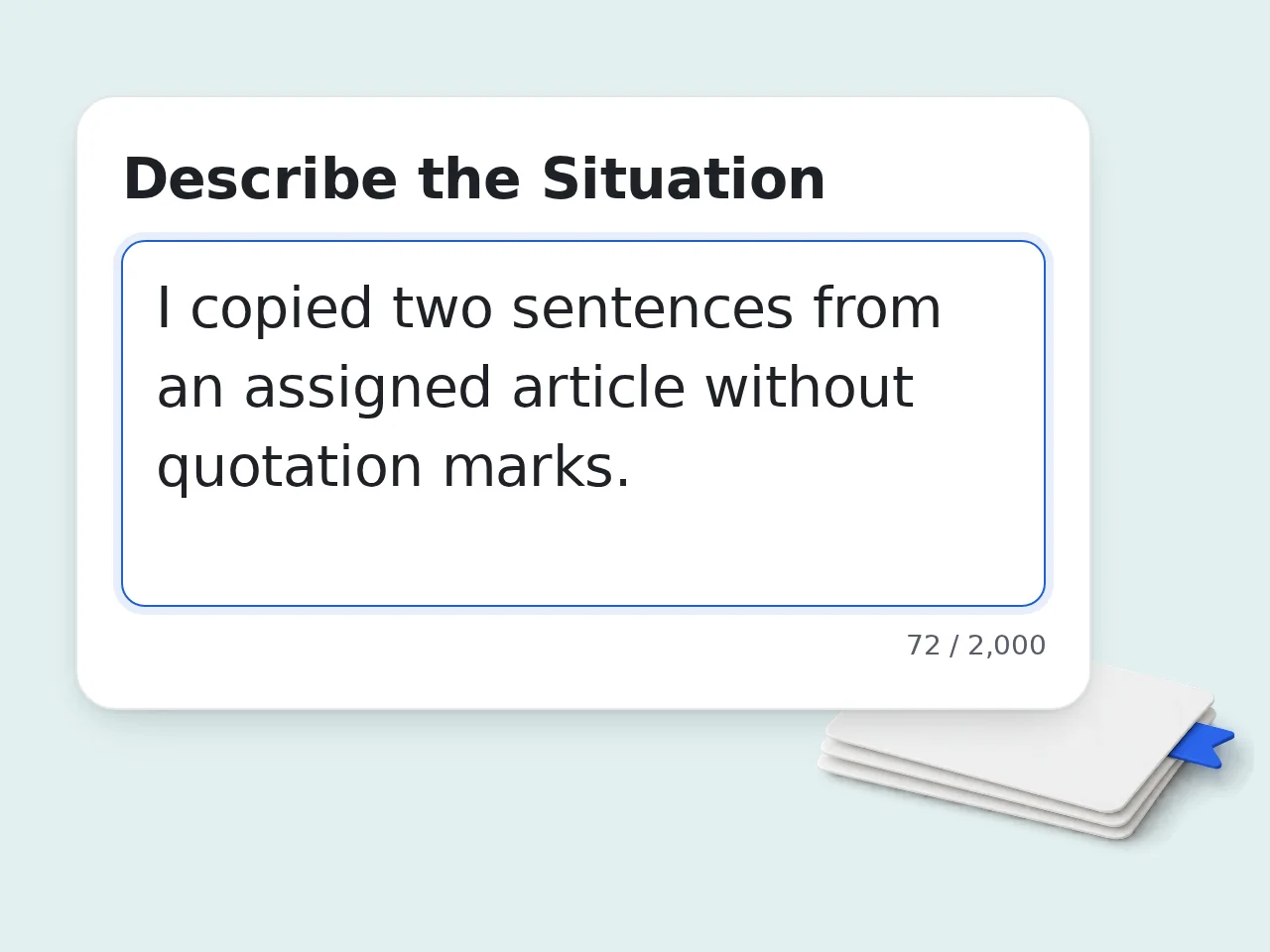
Describe Your Situation
Type a description of the action you want to check. For example: "I paraphrased three paragraphs from a website and cited it once at the end."
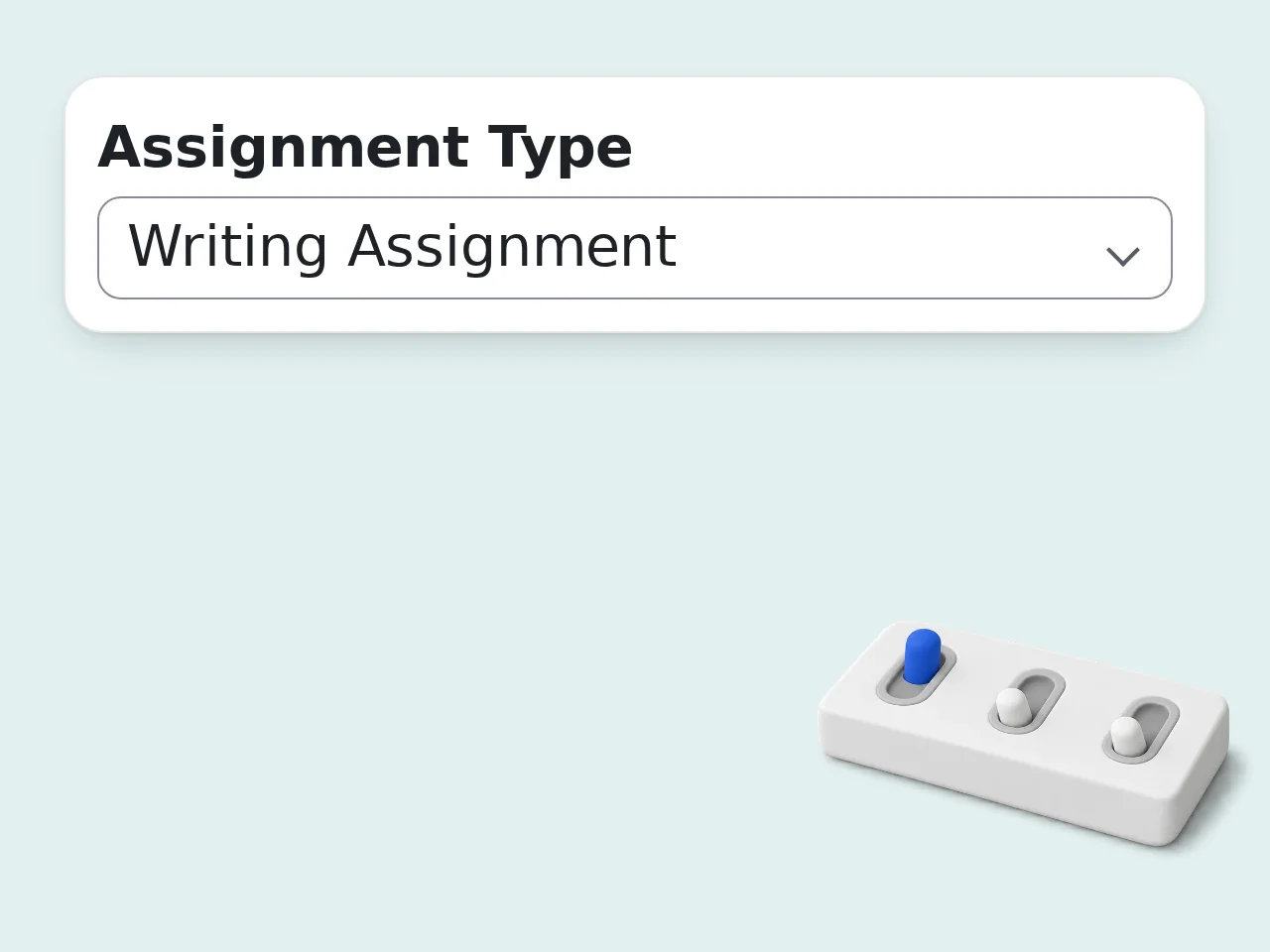
Select Context Details
Choose the assignment type (essay, exam, group project) and optionally specify your education level and AI usage for a more accurate assessment.
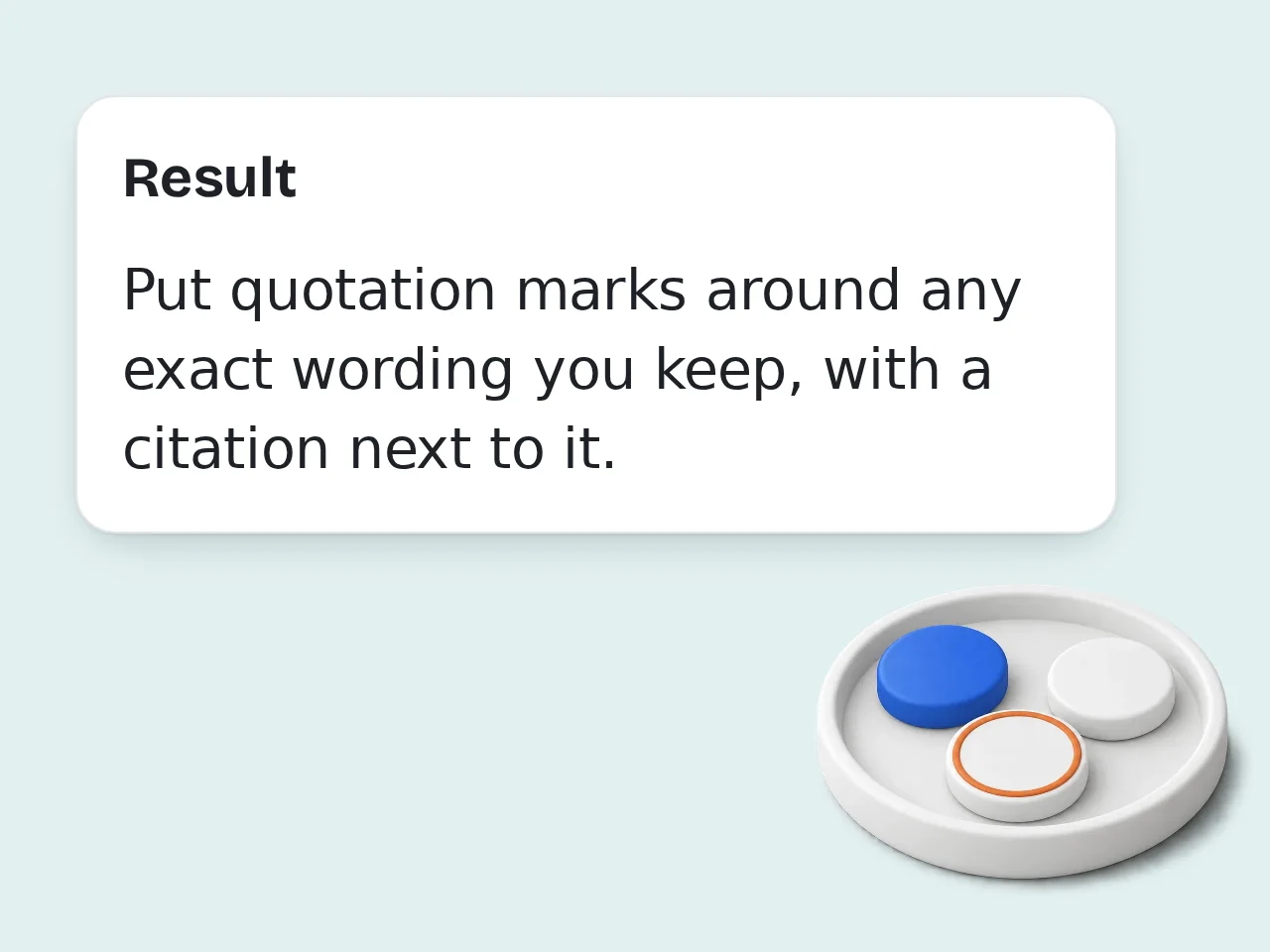
Review Your Results
Read the verdict, which rules may apply, potential consequences, and guidance on how to correct or avoid the issue going forward.
Key Features of Academic Dishonesty Checker
Understand the rules before you break them
Scenario-Based Assessment
Describe any situation — citing sources, working with classmates, using AI — and receive a clear verdict on whether it constitutes a violation under standard university policies.
Consequence Breakdown
Learn the typical consequences for each type of violation, from grade penalties and course failure to suspension, expulsion, and permanent transcript notations.
Correct Action Guidance
Get specific recommendations on how to handle your situation properly — including citation formats, collaboration boundaries, and acceptable ways to use AI in academic work.
Frequently Asked Questions
Common questions answered
What is academic dishonesty?
Academic dishonesty is any act that gives a student an unfair advantage through deception. It includes plagiarism, cheating on exams, fabricating data, unauthorized collaboration, and submitting work done by someone else. Common forms range from copying a classmate's homework to hiring someone to write an entire paper. Most universities list 5 to 8 categories in their honor codes. When in doubt, describe the action in the checker above for an instant assessment.
How do I use this checker?
Type a description of your situation into the text box, select the assignment type, and submit. The checker analyzes your scenario against standard university definitions of academic dishonesty and returns a clear assessment. You can describe anything from citation questions to AI tool usage. The more detail you provide, the more precise the result. No registration or account is needed. Simply describe your situation and receive detailed guidance within seconds.
Is this academic dishonesty checker free to use?
Yes, you can try this checker with a free daily guest allowance or free monthly account credits, with no hidden costs or credit card required to start. It runs directly in your browser and provides instant results. Each check uses credits, with allowances based on your account type. Core scenario analysis features remain available within the free credit allowance. Bookmark this page to quickly verify any academic situation whenever integrity questions come up during the semester.
How many times can I use the checker?
The number of checks depends on your credits. Guests have enough daily credits for one check, and a free account gets 100 credits a month. Each check uses credits and returns a full assessment with explanations and recommendations. Each check is independent, so you can test different versions of the same scenario to understand exactly where the line falls between acceptable conduct and a violation. Use it throughout the semester whenever new assignment situations come up that feel uncertain.
Do I need an account to check for academic dishonesty?
No account or sign-up is required. Start using the checker immediately by describing your situation in the text box above. No email address, password, or personal information is collected. Your queries are not stored or linked to any identity. This means you can honestly describe your situation without worrying about it being traced back to you. Just open the page, type your scenario, and get your result — completely anonymous and private.
What are the most common forms of academic dishonesty?
The most common forms are plagiarism, cheating during exams, unauthorized collaboration, self-plagiarism, data fabrication, and contract cheating. Plagiarism alone accounts for roughly 60 to 70 percent of all reported cases at most universities. Other reported violations include sharing answers on take-home exams, submitting AI-generated text without disclosure, and falsifying lab data. Enter any specific behavior into the checker to find out which category it falls under and what consequences typically follow.
What are the consequences of academic dishonesty?
Consequences typically range from a zero on the assignment to expulsion from the institution. First-time offenses usually result in a failing grade for the assignment or course, while repeat violations often lead to suspension or permanent dismissal. Many universities place a notation on your transcript, and violations can affect graduate school applications and employment background checks. Check your specific scenario above to see which consequence tier your situation most likely falls into.
Does academic dishonesty go on your transcript?
At many universities, yes — especially for serious or repeated offenses. Policies vary, but a notation like "XF" (failure due to dishonesty) is becoming more common across institutions nationwide. Some schools remove the notation after graduation or a waiting period of one to five years, while others keep it permanently. Suspension and expulsion records almost always appear on official transcripts. Contact your registrar for your school's specific policy, and use this checker to assess the severity of your situation beforehand.
Is using AI like ChatGPT considered academic dishonesty?
Using AI tools like ChatGPT can be considered a violation depending on the assignment rules and how you use them. Submitting AI-generated text as your own without disclosure violates most university integrity policies currently in effect. Many professors now permit AI for brainstorming, grammar checking, or outlining — as long as you disclose it. The key factor is whether AI use was authorized and whether you represent the output honestly. Describe your exact AI usage scenario in the checker to get a tailored assessment based on common university standards.
Is academic dishonesty a crime?
It is generally not a criminal offense — it is a policy violation handled through university disciplinary systems. However, extreme cases like forging transcripts, impersonating test-takers, or contract cheating can carry legal penalties in some jurisdictions. Several states and countries have enacted laws targeting essay mills. In those areas, both the provider and the student may face legal consequences. While most cases stay within the university system, the academic and professional fallout can be just as serious as legal trouble.
What is the difference between plagiarism and other forms of academic dishonesty?
Plagiarism specifically means presenting someone else's words, ideas, or work as your own without proper attribution. Other forms include cheating on exams, fabricating data, unauthorized collaboration, and having someone else complete your assignments. Plagiarism is the most commonly reported type and can happen unintentionally through poor citation practices. Exam cheating and contract cheating, by contrast, are almost always deliberate. If you are unsure whether your citation or paraphrasing method is adequate, describe it in the checker to see if it crosses into plagiarism territory.
Can academic dishonesty be unintentional?
Yes, it can absolutely be unintentional. Poor paraphrasing, missing citations, accidental self-plagiarism, and misunderstanding collaboration rules are among the most common ways students commit violations without realizing it. Most university policies judge the act itself rather than intent. Penalties still apply, though consequences may be lighter when a student shows the violation was genuinely accidental. The best defense is to check before you submit. Describe your situation in the checker above to catch potential issues early.
Still have questions?
Contact our support teamCheck Your Academic Dishonesty Risk Now
Describe your situation and find out instantly whether it qualifies as a violation — with clear explanations and guidance on the right approach.