Comma Checker
Check comma placement without rewriting your words
Use the Comma Checker Online
Keep your original wording.
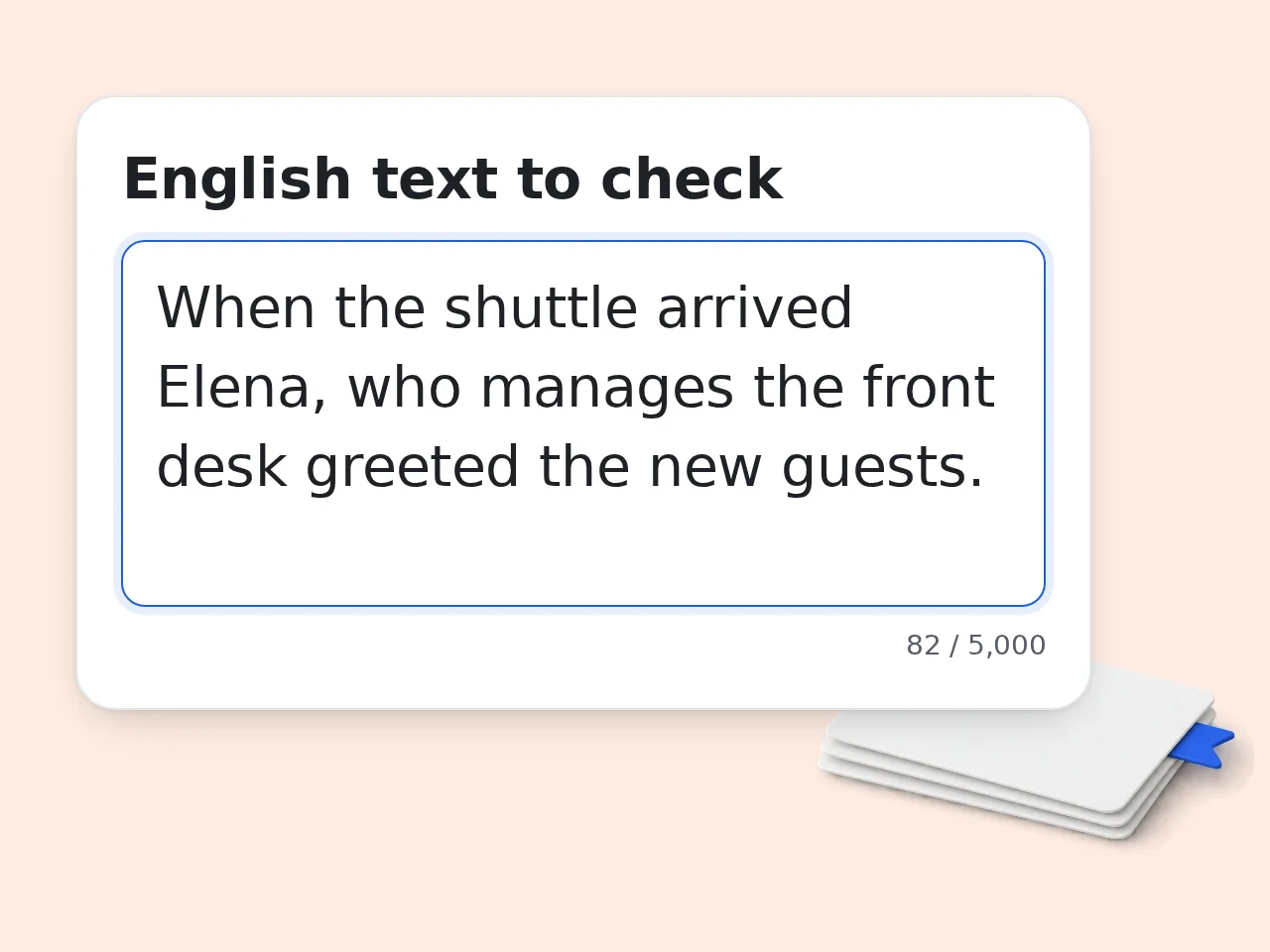
Paste Text into the Comma Checker
Keep existing punctuation and paragraph breaks. The main box accepts 5,000 characters; surrounding sentences help explain names, lists and references.
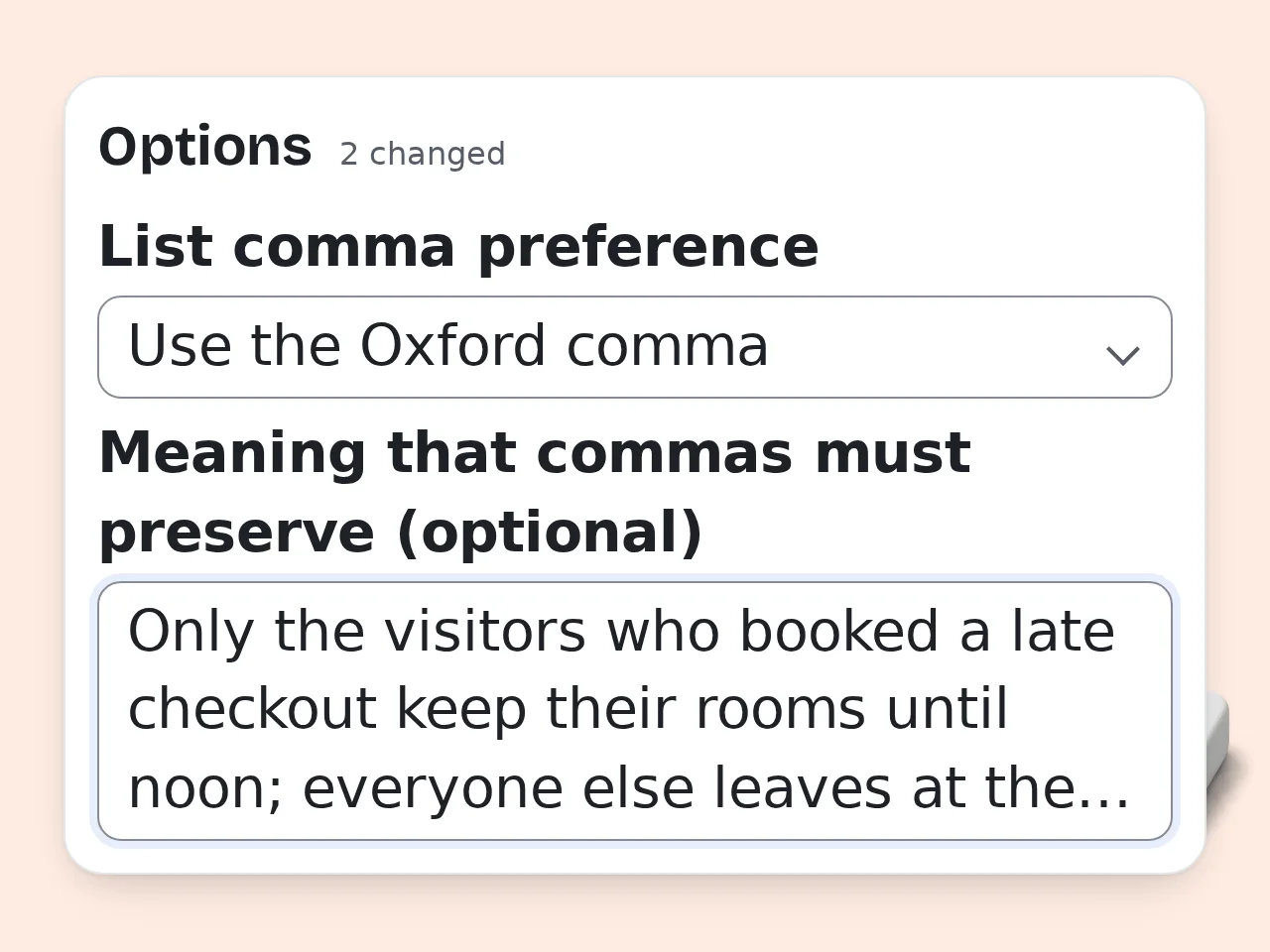
Set Your Comma Placement Preferences
Choose a list convention if needed. Add meaning context and exact protected wording in the optional boxes, then select the explanation language.
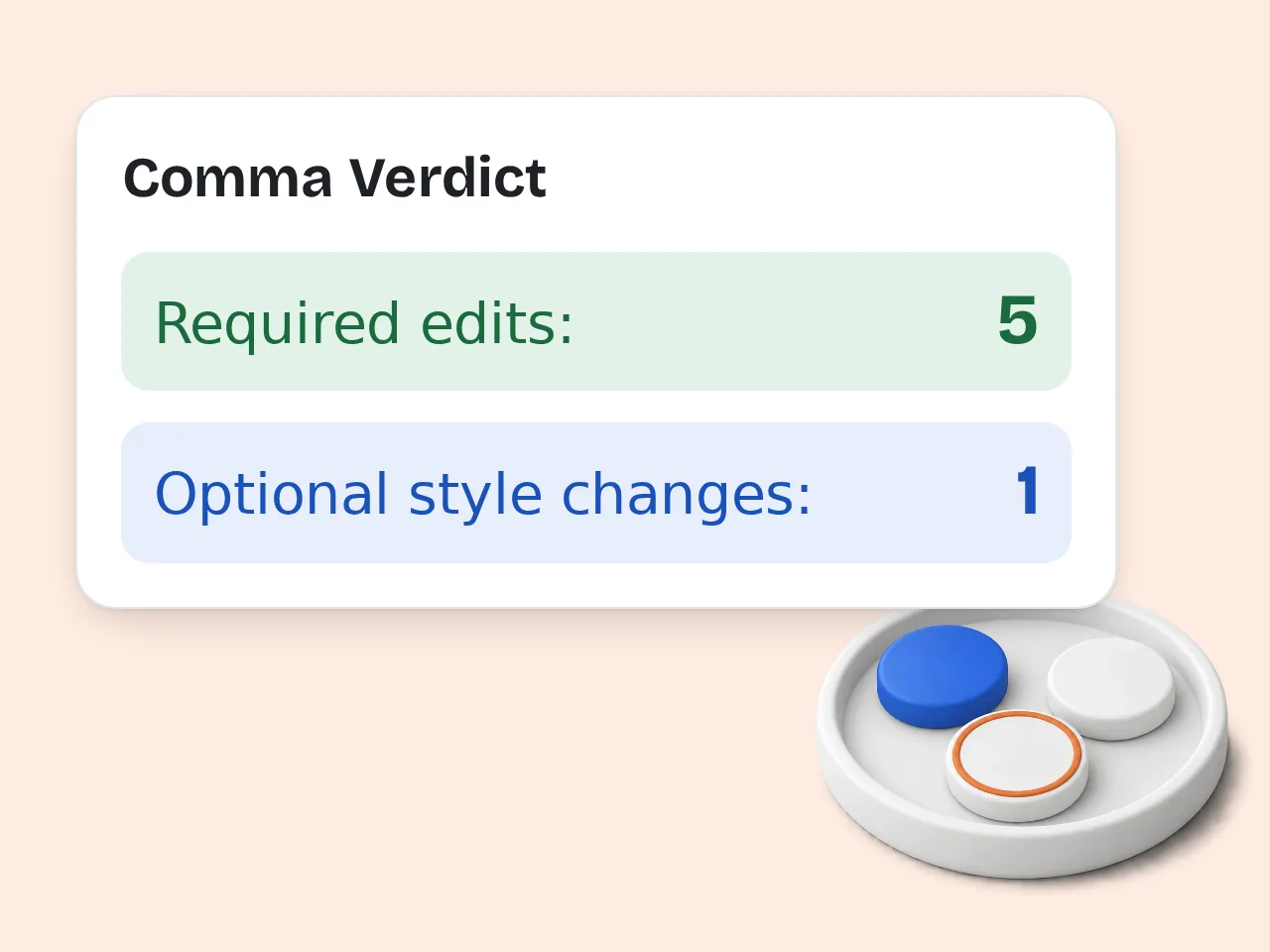
Review the Comma Checker Decisions
Read required edits separately from style choices. Resolve meaning questions before copying the English passage; other punctuation problems may still need attention.

Related Tools
Explore more AI tools in this category






Comma Checker Decisions You Can Review
Separate necessary edits from optional style.

Comma Placement by Grammatical Role
Review introductory clauses, paired insertions, direct address and adjective lists. Each edit quotes the original and explains its grammatical role.

Comma Checker with List Preferences
Keep your convention, request an Oxford comma, or omit it unless clarity needs it. Optional style changes stay separate from grammatical corrections.

Comma Placement That Preserves Meaning
Explain whether a description identifies someone or adds information. Protect quotations and keep ambiguous readings as questions, not silent assumptions.
Comma Checker Questions and Practical Examples
Review changes, limits and judgment calls.
What does this comma checker actually do?
This comma checker reviews missing, unnecessary and meaning-sensitive commas in English text. It separates grammatical corrections from optional list conventions, then gives you an edited passage and reasons for the proposed changes. The decision register identifies the original wording, an add, remove or keep decision, and the grammatical role involved. An uncertain interpretation is marked for review instead of treated as a definite mistake. Use it for a focused editing pass, not as proof that every aspect of your writing is correct.
How do I use the comma checker online?
Paste your original English passage, keeping its punctuation intact, and choose a list preference only if you have one. The comma checker online works without a separate rewritten draft or grammar terminology. For meaning-sensitive descriptions, explain who or what you mean in the context box. Put quotations that must remain exact in the protected wording box. These details can prevent an apparently tidy edit from changing your message. Review unresolved decisions before copying the final passage; do not accept changes solely because they look neater.
Is the comma checker free to try?
The comma checker can be tried with included credits, rather than unlimited free requests. Guests receive 10 credits daily, free registered users receive 100 monthly, and subscriber allowances depend on their plan. This tool is configured to use 8 credits for a guest request and 5 for a registered free or subscriber request. Read the displayed cost before submitting, since your available balance controls whether another check can run. A short paragraph is a useful first check before reviewing a longer piece.
How much text can the comma checker check?
The English text box accepts up to 5,000 characters, and each optional context or protected wording box accepts 600. Those are input limits, not a promise of exhaustive detection or unlimited checks. Your comma checker usage depends on credits: guests get 10 daily, registered free users get 100 monthly, and subscribers follow their plan. Rechecking a revision uses another request, even when most of the text stays unchanged. For longer documents, check coherent sections with enough surrounding context to explain ambiguous references.
Can I use the comma checker without an account?
Guest access lets you submit a comma check without creating an account, using the daily guest credit allowance. Registration is optional for that route; it changes the allowance and the configured request cost. Before submitting, remove confidential details you do not need to explain the punctuation. The protected wording box prevents requested edits to matching text; it is not a privacy setting or a promise about how submitted information is handled. Keep enough context for the comma checker to understand the sentence, while leaving unrelated personal details out.
Does the comma checker always add an Oxford comma?
No. The comma checker preserves your existing list convention by default. You can instead request the comma before the final conjunction, or omit it where doing so does not create ambiguity. In a three-item list such as pencils, folders and labels, the final comma can reflect house style. A comma with another grammatical purpose, such as closing an inserted description, should not be removed merely to satisfy the list preference. Tell the tool your convention, then review clarity separately from consistency.
Can comma placement change who a sentence refers to?
Yes. A description without surrounding commas can identify a particular member of a group, while a description set off by commas normally supplies additional information about someone already identified in context. For example, a reference to a sibling named Nora may identify which sibling you mean or add the name as supplementary information. The comma checker cannot know your family relationships from a name alone and should not invent them. Explain the intended reference, or leave the proposed change unresolved until you can decide.
How does the comma checker handle paired commas?
A mid-sentence insertion often needs a comma on each side, not just at its opening. The comma checker examines whether the main sentence resumes after the added information and flags incomplete pairs. Consider a sentence that introduces an already identified colleague, adds a short descriptive phrase, and then returns to the main verb. Both edges of that extra phrase matter. An insertion at the sentence end does not need another comma before the period. Read the complete sentence rather than fixing one mark in isolation.
How is this different from a general punctuation checker?
A general punctuation checker may review periods, apostrophes, quotation marks and broader grammar together. This comma checker keeps its edited passage focused on commas and separates list style from grammatical necessity. If a sentence needs a semicolon or new wording, the report can flag that boundary problem without silently doing a wider rewrite. That narrow scope helps when an editor must retain the author's wording or inspect a particular punctuation decision. Use a broader punctuation checker afterward if you also need non-comma problems corrected.
Why not place commas wherever I pause while reading?
A spoken pause is not a reliable comma rule because breathing, emphasis and reading speed vary. The comma checker looks at grammatical relationships rather than treating every audible break as a missing mark. For instance, a long subject still normally connects directly to its verb without a separating comma. With adjectives, equal descriptive roles may justify a comma, but cumulative descriptions do not automatically need one between every word. Reading aloud can reveal confusion; use the sentence structure to decide how to repair it.
What if I disagree with a comma checker suggestion?
Inspect the quoted excerpt and decide whether the report has understood the intended meaning. A comma checker suggestion can be wrong, especially when a description's reference depends on information outside the paragraph. Correct the meaning note, keep the original wording, and check again if necessary. If the disagreement is only about an optional list comma, use the style control instead of treating one convention as a universal grammatical rule. For publication, follow the relevant editor's requirements and review the final passage yourself.
Can the comma checker preserve quotations and check other languages?
You can mark exact passages to remain unchanged; the comma checker should discuss any suspected problem outside those protected spans. That control preserves wording during editing, but does not certify a quotation's source. The checking scope is English. You may request explanations in another language while the original evidence and minimally edited passage stay in English. Selecting Japanese or Korean explanations does not turn this into a Japanese or Korean punctuation service. Use the appropriate language-specific checker when the source text itself is not English.
Still have questions?
Contact our support teamTry the Comma Checker on Your Paragraph
Keep your wording. Review the reason for each suggested mark.