AI Essay Organizer
Plan and structure any essay in seconds with AI-powered organization
How to Use the Essay Organizer
Get your essay outline in 3 simple steps
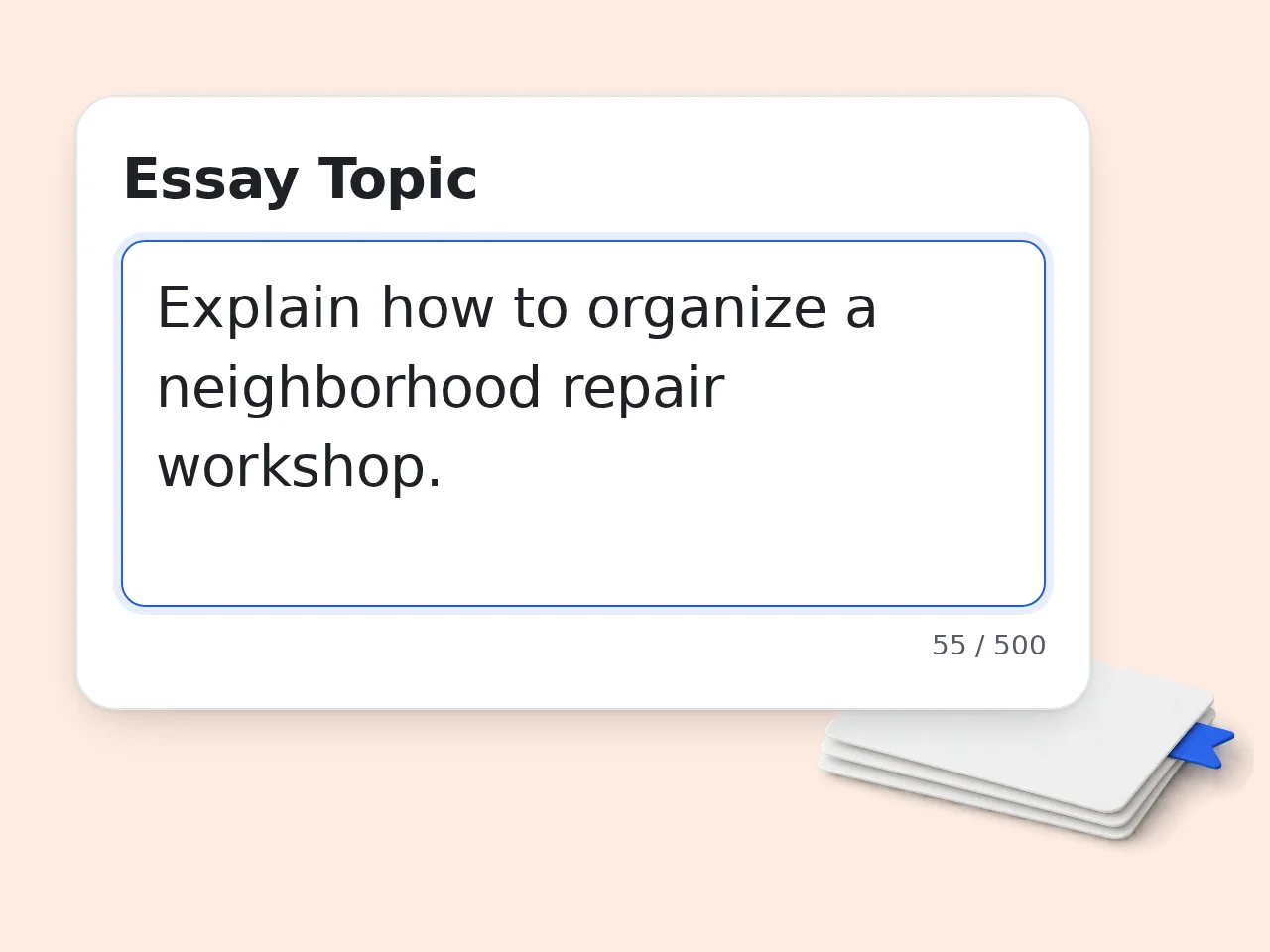
Enter Your Essay Topic
Type your essay topic or prompt into the text field. Add your thesis statement if you already have one, or let the essay organizer suggest one for you.
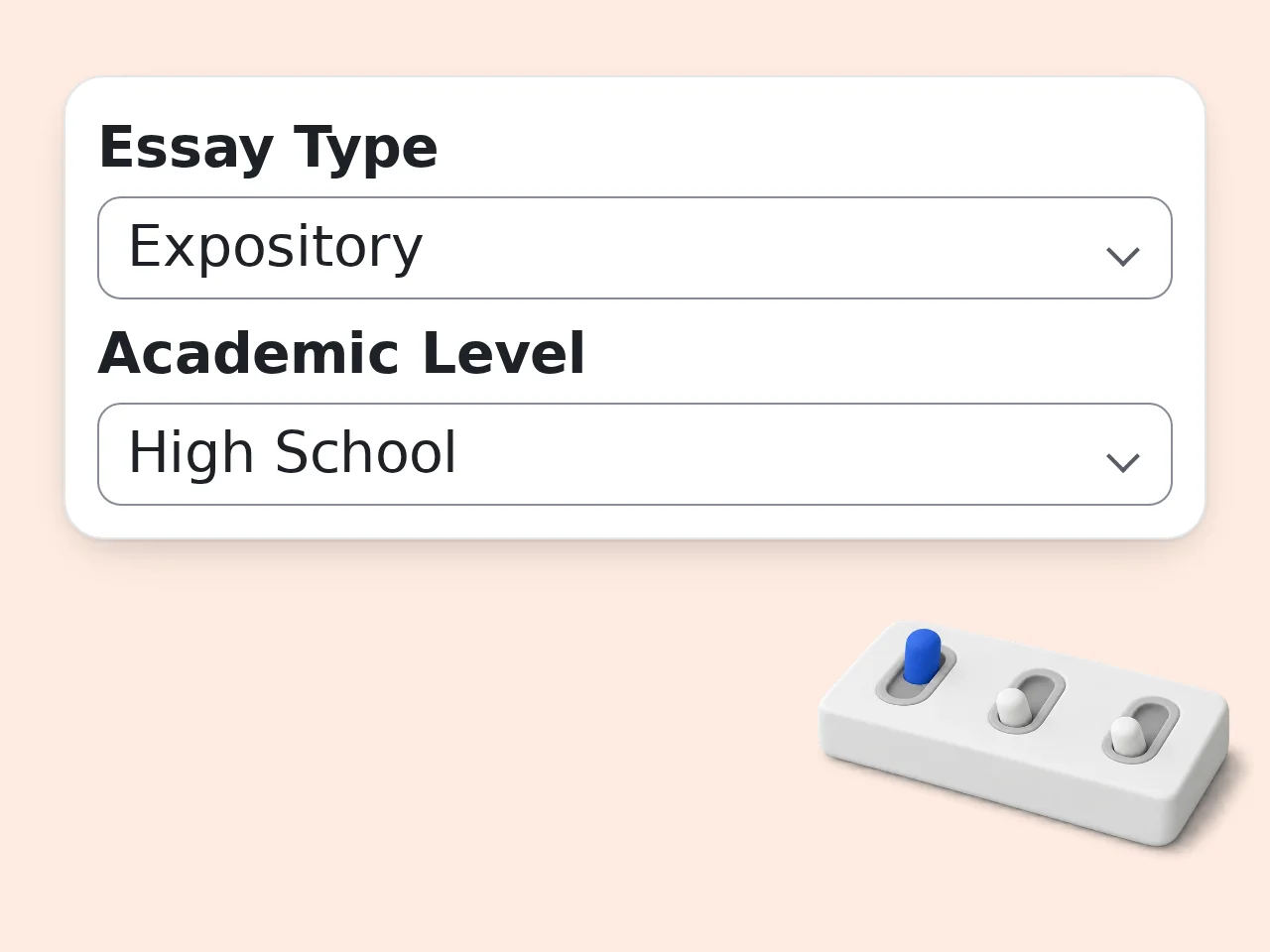
Select Type and Level
Choose your essay type (argumentative, expository, narrative, etc.) and academic level. Adjust the number of body paragraphs if needed.
Get Your Organized Outline
Click generate to receive a complete essay plan. Each section includes topic sentences, supporting points, and writing guidance you can follow paragraph by paragraph.
Key Features of AI Essay Organizer
Everything you need to plan and structure essays in one place
7 Essay Types Supported
Argumentative, expository, narrative, persuasive, compare-contrast, descriptive, and cause-effect. Each type follows its own structural conventions.
4 Academic Levels
From middle school five-paragraph essays to graduate-level analytical frameworks. Vocabulary and complexity adjust to match your level.
Complete Outline with Thesis
Get a full essay structure: thesis statement, introduction hook, body paragraph topics with supporting points, and a conclusion. Ready to write from immediately.
Frequently Asked Questions
Common questions answered
What is an AI essay organizer and how does it work?
An AI essay organizer is a tool that takes your essay topic, type, and academic level, then generates a structured outline you can write from directly. It analyzes your topic to create a logical flow with thesis statement, body paragraph topics, supporting evidence suggestions, and transitions. The tool uses different structural templates for each essay type — for example, claim-evidence-rebuttal for argumentative essays and chronological flow for narratives. You can customize the output by adding your own thesis statement or adjusting the number of paragraphs to fit your assignment requirements.
How do I use the essay organizer to get the best results?
Start by writing a specific topic in the essay topic field. The more detail you provide, the more targeted your outline will be. "The impact of social media on teen mental health" gives better results than just "social media." Select the correct essay type and academic level so the tool calibrates vocabulary and complexity accordingly. College-level argumentative essays include counterargument sections. If you have a thesis already, enter it in the advanced options. The organizer builds every body paragraph around supporting that claim.
Is the essay organizer free to use?
Yes, the essay organizer is completely free. Guests can use it without creating an account, and free registered users have a monthly credit allowance at no cost. All features are available at no charge, including every essay type, all academic levels, and the full range of paragraph count options. Subscription plans are available if you need higher limits or access to advanced AI models for more detailed outlines. See the pricing page for current details.
How many times can I use the essay organizer per day?
Guests who visit without an account get limited daily free tries. Free registered users have a monthly credit allowance. Registration is quick and only requires an email address. Copy or download your outlines as .txt files to keep them for later. Subscribers get higher limits and access to premium AI models that produce more detailed and nuanced outlines. See the pricing page for current details.
Can I use the essay organizer without creating an account?
Yes, you can use the essay organizer immediately without signing up or creating any account. Just enter your topic, select your essay type and academic level, then click generate. Guest users have access to all essay types, academic levels and paragraph count options. Guest usage draws on a small daily credit allowance shared across tools. Creating a free account takes under a minute and gives you a monthly credit allowance for more outlines.
What essay types does the essay organizer support?
The essay organizer supports seven essay types: argumentative, expository, narrative, persuasive, compare-and-contrast, descriptive, and cause-and-effect. Each type follows a different structural framework tailored to its purpose. Argumentative essays get claim-evidence-rebuttal sections. Compare-and-contrast essays use point-by-point or block method depending on paragraph count. Narrative essays follow a story arc with rising action. Add special requirements in the advanced options if your assignment has unique structural needs beyond these seven standard types.
Does the essay organizer generate a thesis statement for me?
Yes, if you leave the thesis field empty, the essay organizer automatically generates a thesis statement based on your topic, essay type, and academic level. It creates a specific, arguable claim that your entire outline is then built around. The generated thesis is labeled as AI-suggested so you can identify it and modify it before writing. If you already have your own thesis, enter it in the advanced options. For argumentative essays at college level, the tool generates more nuanced thesis statements that acknowledge complexity in the topic.
Why use the essay organizer instead of planning manually?
Manual essay planning typically takes 20 to 40 minutes of staring at a blank page, brainstorming, and reorganizing ideas. The essay organizer produces a structured outline in under 10 seconds, complete with thesis, topic sentences, and supporting point suggestions. The tool also applies proven structural conventions for each essay type that students might not know. A middle schooler gets appropriate five-paragraph scaffolding while a graduate student gets analytical frameworks. You keep full control — the outline is a starting point you can rearrange, expand, or simplify before writing.
Why use the essay organizer instead of asking ChatGPT?
The essay organizer is purpose-built for essay planning with a structured form that ensures you get the right format every time. With ChatGPT, you need to write a detailed prompt and often go back and forth to get a usable outline. This tool automatically applies the correct structural template for each essay type and calibrates complexity to your academic level — no prompt engineering required. The result is a consistent, well-formatted Markdown outline with clear sections, sub-points, and writing guidance that you can follow step by step.
How can I get better results from the essay organizer?
Write your essay topic as a complete, specific statement rather than a few words. Include the scope or angle you want to explore. For example, use "How renewable energy policies in Europe have reduced carbon emissions since 2015" instead of just "renewable energy." Fill in the advanced options when possible. Adding your own thesis statement gives the AI a clear anchor to build around. Specifying special requirements helps tailor the outline. Choose the right academic level — this significantly changes the vocabulary, argument depth, and evidence types suggested in your outline.
What if the essay outline isn't what I expected?
You can regenerate the outline by adjusting your inputs. Try making your topic more specific, changing the essay type, or adding a thesis statement to guide the AI in a particular direction. The outline is a starting framework, not a final draft. Move sections around, add your own points, or remove suggestions that don't fit your vision for the essay. For complex topics, try generating outlines with different essay types to see which structure works best for your argument before committing to one approach.
Can I use the essay organizer for research papers and long assignments?
Yes, the essay organizer handles essays from 3 to 7 body paragraphs. For longer research papers, set the paragraph count to 7 and use the graduate academic level for detailed structural frameworks. Each body paragraph section includes topic sentences and supporting point suggestions that serve as sub-section outlines. Use these as a foundation and expand each into multiple paragraphs. Add specific requirements in advanced options — like "include a literature review" or "address three counterarguments" — to customize the outline for your assignment.
Still have questions?
Contact our support teamReady to Organize Your Next Essay?
Turn any topic into a structured, ready-to-write essay plan