Haiku Checker
Check 5-7-5 syllables, line structure, and essential haiku elements
How to Use the Haiku Checker
Check a haiku in three focused steps
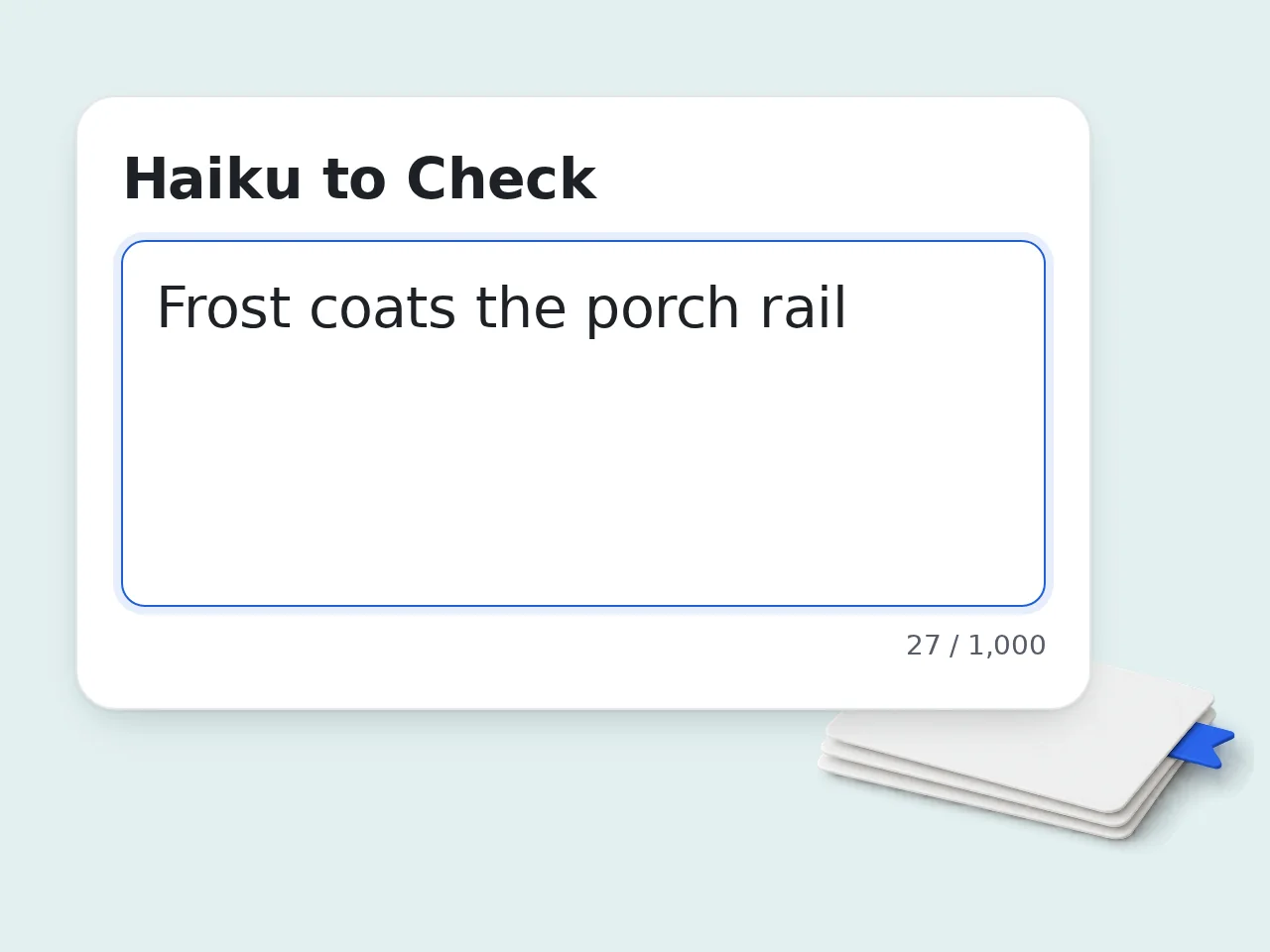
Paste Your Three-Line Haiku
Keep the original line breaks. The haiku checker reads every non-empty line separately, so formatting affects the report.
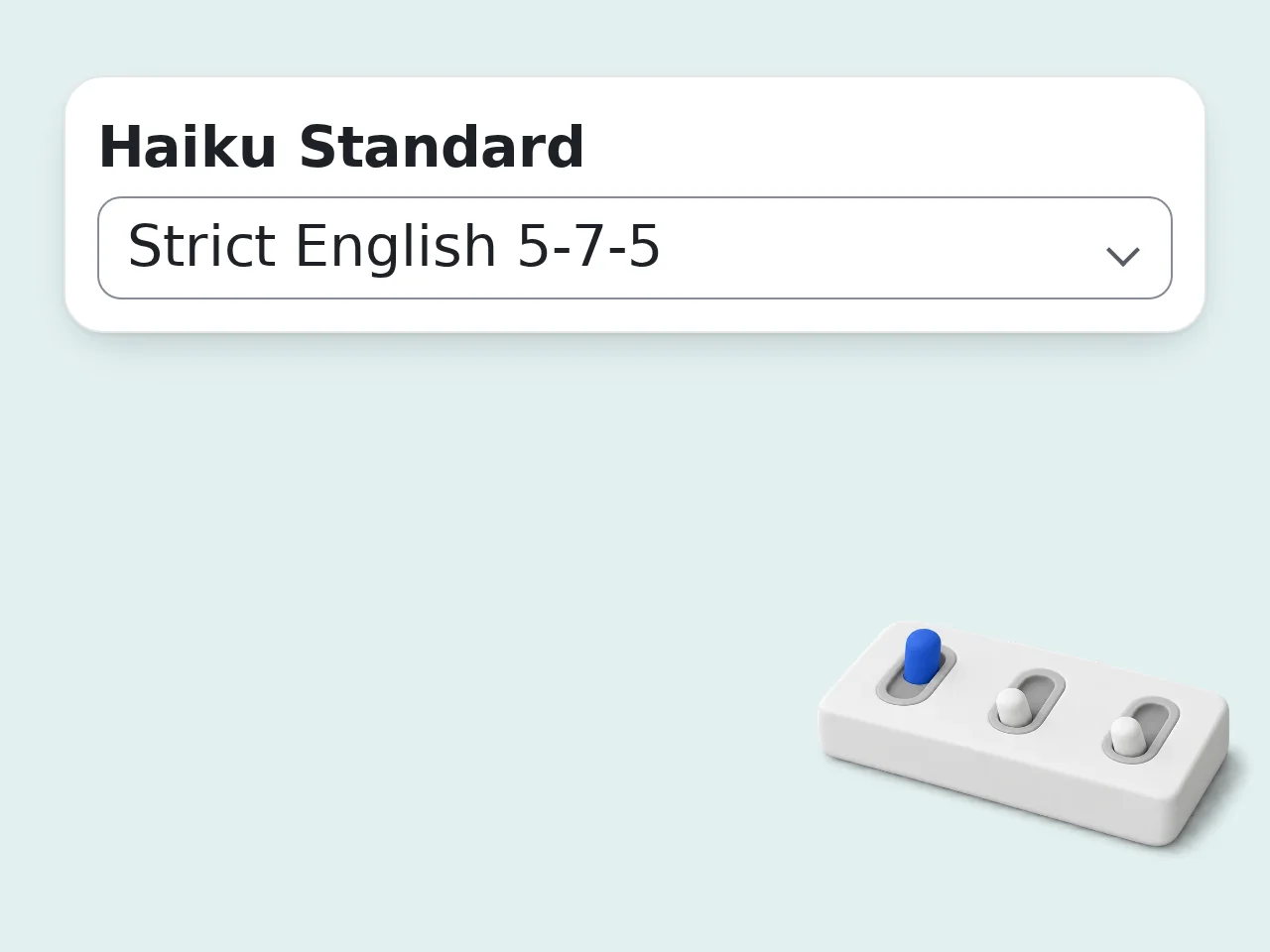
Choose a Haiku Standard
Select strict 5-7-5, modern English, or Japanese mora guidance. Add a pronunciation preference or protected phrase if needed.
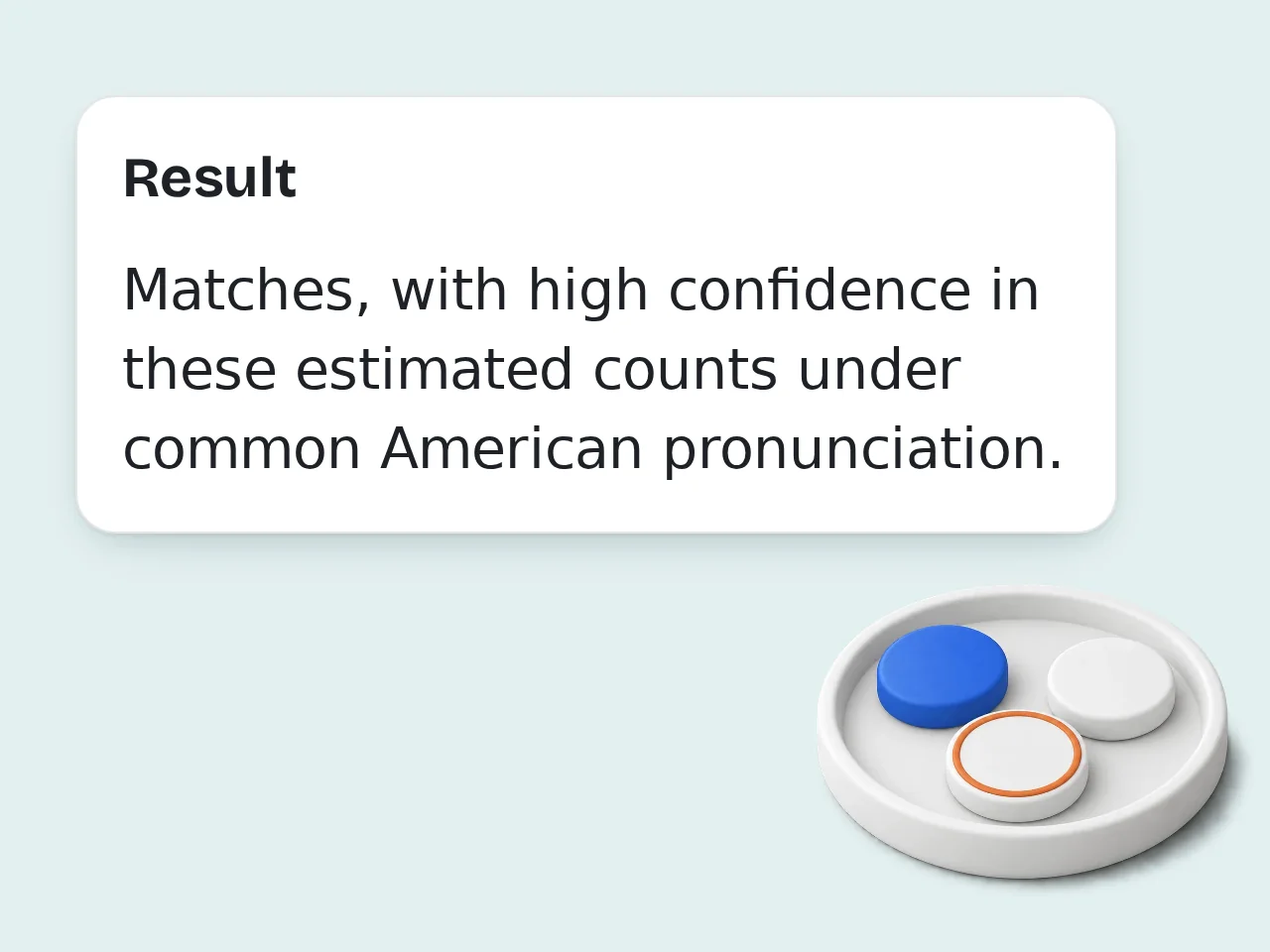
Review Counts and Repair Options
Read the verdict, count table, uncertainty notes, and element checklist. Test a minimal revision before keeping the change.
Haiku Checker Features for Clearer Revision
A haiku syllable counter plus convention-aware feedback
Line-by-Line Haiku Syllable Check
See each original line, its estimated count, selected target, and difference. Ambiguous names, contractions, and alternate pronunciations are clearly flagged.
Three Haiku Format Modes
Choose strict English 5-7-5, flexible modern English, or Japanese mora guidance. The haiku format checker applies only the convention you select.
Minimal Haiku Repair Options
Get count-aware edits for a mismatched line while protecting an important word or image. Revise without replacing the whole poem.
Haiku Checker Questions and Practical Answers
Understand syllables, 5-7-5 rules, morae, and checker limits
What is a haiku checker, and what does it examine?
A haiku checker reads a submitted poem line by line and compares it with the haiku convention you choose. It estimates syllables or morae, checks line structure, and reports a clear verdict. This checker also looks for a seasonal or time signal, concrete imagery, juxtaposition, a cut or pause, and concise wording. Those elements receive descriptive findings rather than a broad quality score. Use the uncertainty notes before revising, because names, dialect, and alternate pronunciations can change a count.
How do I use the haiku checker for the clearest result?
Paste the poem with its original three line breaks, then choose strict 5-7-5, modern English haiku, or Japanese mora guidance. Select a pronunciation preference only when it matters. The haiku checker returns a line table showing each estimate, target, difference, and status. It then explains uncertain words and reviews common haiku elements using evidence from your text. If a line misses its target, test one minimal repair at a time and rerun the check before changing another line.
Is the haiku checker free to use?
Yes. The haiku checker is free to try with the credits included for your user type. It does not require a purchase before you can submit a poem and inspect the report. Each check consumes the credit amount shown for this tool. Guests receive 10 credits per day, free registered users receive 100 credits per month, and subscribers receive more credits according to their plan. Check the credit indicator before submitting if you are comparing several versions of the same haiku.
How many free credits do I get for the haiku checker?
Guests receive 10 credits each day, while free registered users receive 100 credits each month. Subscribers receive a larger allowance based on the subscription plan attached to their account. Credits are not the same as a fixed number of haiku checks. The actual number of uses depends on the tool cost displayed when you run it, and that cost can differ between tools. Registering is useful when you want a monthly allowance for repeated drafts instead of the smaller daily guest balance.
Can I use this haiku checker without creating an account?
Yes. A guest can use the haiku checker without creating an account, provided enough of the 10 daily guest credits remain for the request. The current cost appears near the tool. An account is optional for a quick format check. Free registration changes the allowance to 100 credits per month and can make it easier to return for several rounds of revision. Subscribers receive credits by plan. Avoid pasting private identifying details; the checker only needs the poem and any phrase you want preserved.
How accurate is an AI haiku syllable counter?
An AI haiku syllable counter can give a useful estimate, but no automatic count is flawless for every speaker or word. Pronunciation varies across accents, names, contractions, loanwords, and poetic elision. The haiku checker therefore lists material uncertainty instead of presenting a questionable count as certain. For example, one word may reasonably have one or two syllables, changing a strict line verdict. Read the poem aloud in your own voice and treat that spoken version as the final check when an ambiguity is flagged.
Does every haiku have to follow a 5-7-5 syllable pattern?
No. A strict English classroom haiku often uses three lines of 5, 7, and 5 syllables, but many respected modern English haiku use fewer syllables and different line lengths. Choose strict mode when an assignment, contest, or personal exercise explicitly requires 5-7-5. Choose modern English mode when image, cut, brevity, and movement matter more than reaching exactly seventeen syllables. The haiku format checker reports counts in both cases, but only strict mode treats a count mismatch as a failed target.
What is the difference between syllables and Japanese morae?
English syllables and Japanese morae are different sound units, so a Japanese 5-7-5 pattern cannot be transferred mechanically into seventeen English syllables. A long vowel or final nasal can affect mora counting differently. Japanese text may also contain kanji with more than one possible reading. The haiku checker labels Japanese results as mora guidance and flags readings that cannot be confirmed from the text alone. For an important Japanese poem, verify the intended reading aloud or provide kana before accepting a borderline automated count.
Can the haiku checker identify kigo and a cutting moment?
The haiku checker can identify likely seasonal or time signals and places where punctuation, syntax, or juxtaposition creates a cut. It labels these findings as present, possible, absent, or not required. A season word does not have to be an obvious month name; frost, cicadas, migrating birds, or a particular blossom may carry seasonal meaning. A cut can also occur without a dash. Treat the report as evidence for rereading, not cultural certification, especially when context or a regional association is missing.
Why use a dedicated haiku checker instead of a poem rater?
A dedicated haiku checker answers a narrow question: how the submitted lines fit the chosen haiku convention and where the count is uncertain. It produces a verdict, count table, element checklist, and minimal repairs. A general poem rater usually evaluates broad craft such as voice, emotional movement, originality, structure, and publication readiness, often with a numeric score. That is a different search intent. Use this checker during form revision; choose a wider critique tool later if you want subjective feedback on overall poetic quality.
How can I get better results when a word has two pronunciations?
Select the closest English pronunciation setting, preserve the original line breaks, and read the questionable word aloud in the voice you intend. The haiku checker will show alternate counts when they affect the result. Names, regional forms, contractions, and words such as “fire” may be heard differently. If the strict target depends on one reading, revise a nearby word so the line works under both common counts. That small buffer makes the haiku more robust for readers who do not share your accent.
Can teachers and students use the haiku checker for assignments?
Yes. Teachers can use the haiku checker to demonstrate line structure, counting uncertainty, and the difference between a classroom 5-7-5 exercise and broader haiku practice. Students can inspect their own drafts. The report explains rather than merely marking a poem wrong, so it supports revision and discussion. It should not replace an instructor’s rubric, cultural context, or the student’s responsibility to read the lines aloud. For graded work, select the convention named in the assignment and cite any ambiguous pronunciation during review.
Still have questions?
Contact our support teamCheck Your Haiku Before You Share It
See the line counts, uncertainties, and smallest useful fixes in one focused report.