Old Norse Translator
Translate any language to Old Norse or convert Old Norse to modern languages with runic script support
How to Use Old Norse Translator
Translate to or from Old Norse in 3 simple steps
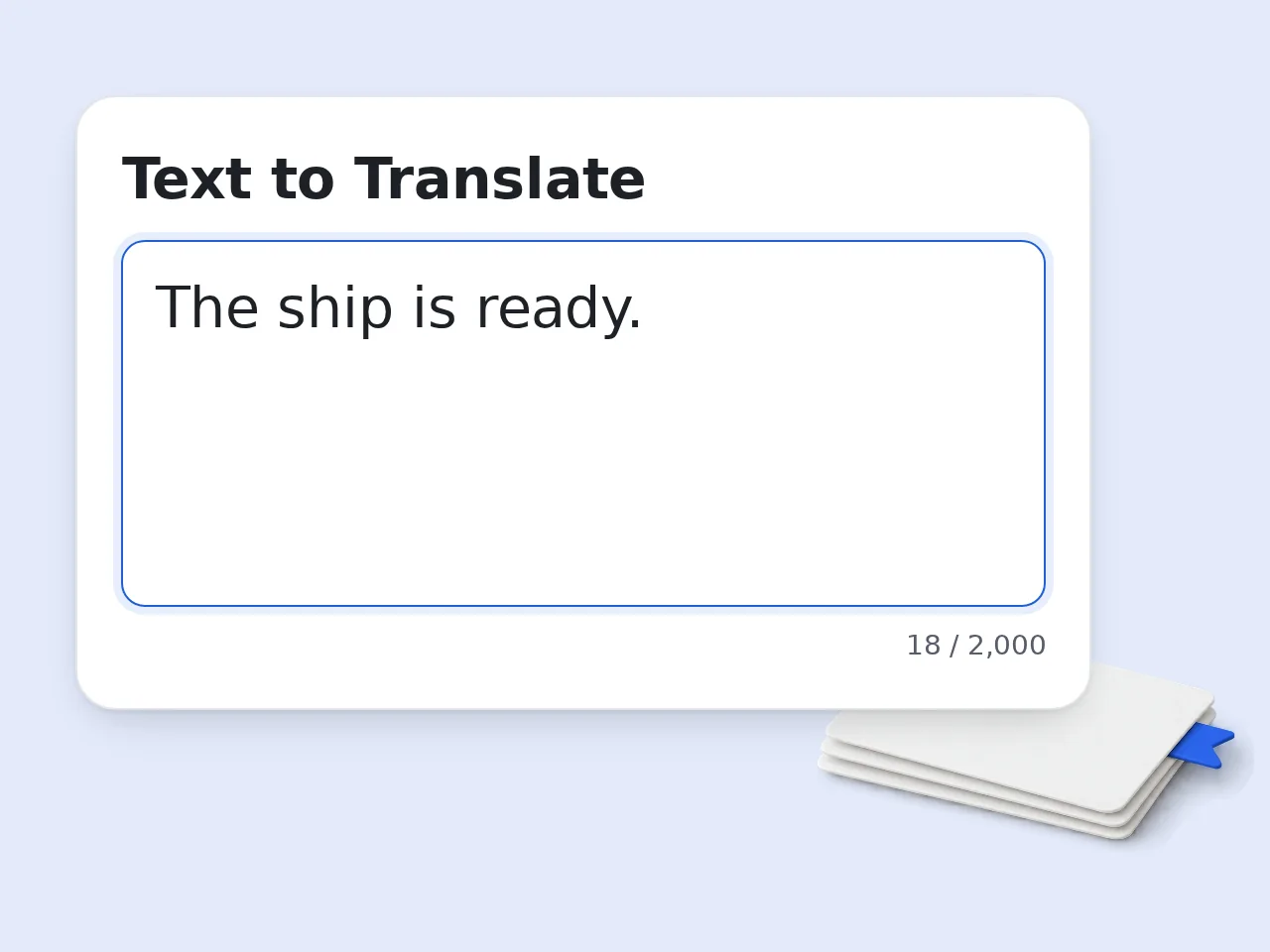
Enter your text
Type or paste your text into the input box. You can enter text in any language (English, Chinese, Japanese, etc.) to translate into Old Norse, or enter Old Norse text to translate it into another language. The Old Norse translator automatically detects what you input.
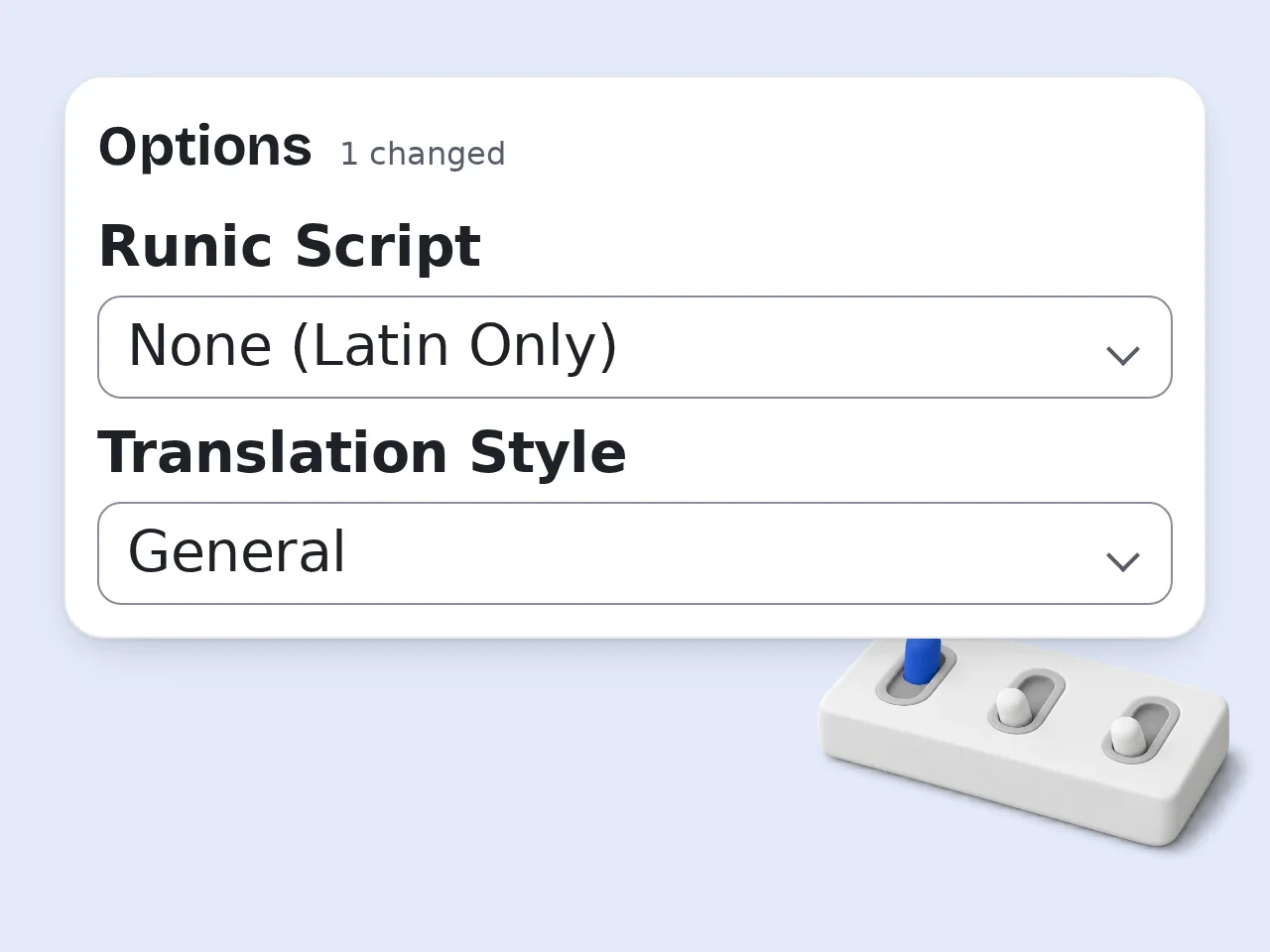
Choose translation direction
Select whether you want to translate TO Old Norse or FROM Old Norse. If translating from Old Norse, open Advanced Settings to pick your output language from 18 available options including English, Chinese, Japanese, Korean, and more.
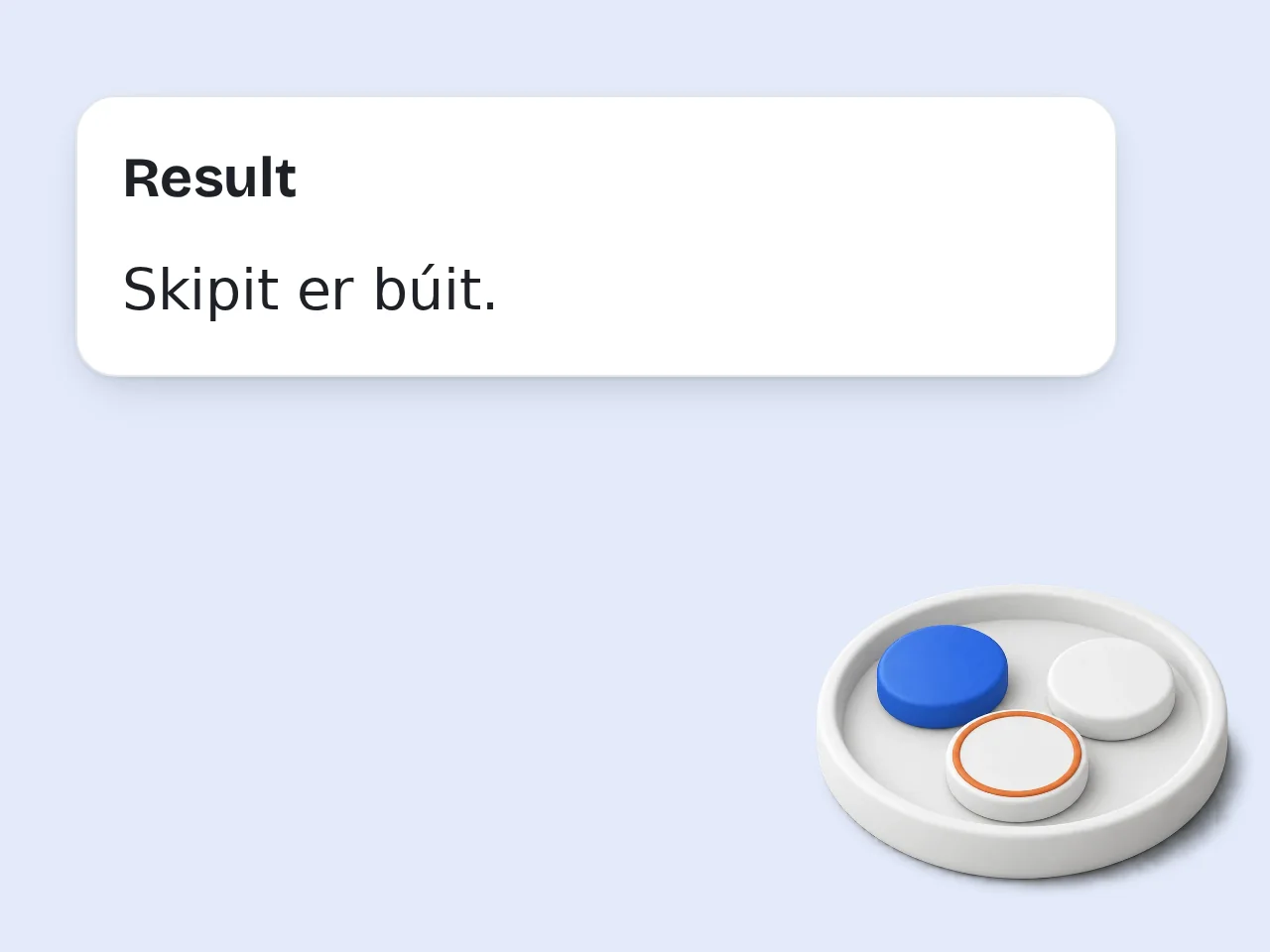
Get your Old Norse translation
Click Generate to receive your Old Norse translation instantly. Results include the translated text in Latin script, optional runic script versions (Elder Futhark, Younger Futhark, or Anglo-Saxon), pronunciation guides, and word explanations if enabled.

Key Features of Old Norse Translator
Everything you need to translate and explore the ancient Viking language
Bidirectional Old Norse Translation
Translate from any language to Old Norse, or convert Old Norse text back to your preferred language. AI automatically detects input language.
3 Runic Script Systems
View translations in Elder Futhark, Younger Futhark, or Anglo-Saxon Futhorc. Copy runic text for tattoos, artwork, or social media.
Pronunciation & Word Explanations
Get phonetic guides to pronounce Old Norse correctly. Optional word-by-word explanations reveal the meaning and etymology of each term.
Frequently Asked Questions
Common questions about Old Norse Translator answered
What is Old Norse and why would I want to translate into it?
Old Norse was the language spoken by Vikings and other Scandinavian peoples from roughly the 8th to 15th centuries. It is the ancestor of modern Icelandic, Norwegian, Swedish, Danish, and Faroese. People use Old Norse translators for many reasons: creating authentic Viking-themed tattoos, writing historical fiction or fantasy stories, researching Norse mythology and sagas, designing artwork with runic inscriptions, preparing scripts for historical reenactments, or simply exploring their Scandinavian heritage. This Old Norse translator makes the ancient language accessible to everyone.
How accurate is this Old Norse language translator?
This English to Old Norse translator uses AI trained on historical sources including runestones, Eddic poetry, sagas, and scholarly linguistic resources. While no translator can perfectly capture every nuance of a historical language, the translations are suitable for creative projects, educational purposes, and personal use. For academic publications or professional historical work, we recommend consulting with Old Norse scholars to verify translations. The tool provides historically-informed translations that respect Old Norse grammar and vocabulary patterns.
Can I translate Old Norse to English or other languages?
Yes. This Old Norse translator works in both directions. Select "From Old Norse" as your translation direction, then choose your preferred output language from 18 options including English, Chinese, Japanese, Korean, French, Spanish, German, and more. Simply paste your Old Norse text and the translator will convert it to your chosen modern language with explanations if desired.
What runic scripts does the Old Norse rune translator support?
The Old Norse rune translator supports three major runic systems: Elder Futhark (the oldest runic alphabet, used roughly 150-800 CE, with 24 characters), Younger Futhark (the Viking Age script, used 800-1100 CE, with 16 characters), and Anglo-Saxon Futhorc (used in England, with 26-33 characters). Each system has historical significance—Elder Futhark for earlier inscriptions, Younger Futhark for Viking runestones, and Anglo-Saxon for Old English contexts. Choose the system that matches your intended historical period or aesthetic preference.
Is this Old Norse translator free to use?
Yes, basic use is completely free. Guest users get limited daily free tries without creating an account. Free registered users have a monthly credit allowance. If you need more translations for ongoing projects or professional use, subscription plans offer increased limits. The core translation features including runic script conversion are available to all users. See the pricing page for current details.
Can I use translations for tattoos or inscriptions?
Absolutely. Many users specifically use this Old Norse translator for tattoo designs and inscriptions. Select the "Tattoo/Inscription" style in Advanced Settings for concise, impactful translations optimized for permanent artwork. The runic script options let you see exactly how your text appears in Elder Futhark or Younger Futhark runes. We recommend double-checking important translations and consulting tattoo artists familiar with runic scripts to ensure proper rendering.
How do I pronounce Old Norse words from the translator?
Enable the "Include Pronunciation Guide" option in Advanced Settings. The Old Norse translator will provide phonetic guides showing approximately how each word was pronounced during the Viking Age. Old Norse pronunciation differs significantly from modern English—for example, the letter "þ" sounds like "th" in "thin," and "ð" sounds like "th" in "this." The pronunciation guides help you speak Old Norse phrases correctly for reenactments, readings, or personal enjoyment.
What types of content work best with this translator?
The Old Norse translator handles various content types effectively: names (personal names, place names, character names for games or stories), short phrases and mottos (for tattoos, jewelry, or artwork), poetry and verses (in skaldic or eddic style), dialogue for historical fiction, ceremonial or ritual phrases, battle cries and exclamations, and longer prose passages for research. The "Translation Style" option lets you optimize for general use, academic accuracy, creative/poetic rendering, or tattoo-friendly brevity.
What advantages does this tool have over ChatGPT or other AI assistants?
This dedicated Old Norse translator offers several advantages over general AI assistants: it is specifically optimized for Old Norse with a focused prompt and settings, includes built-in runic script conversion without extra requests, provides structured output with translation, runes, and pronunciation in one result, offers specialized style options (academic, creative, tattoo), and requires no prompt engineering—just enter your text and select options. General AI tools can translate Old Norse but require careful prompting and may not include features like automatic runic conversion.
Who benefits most from using the Old Norse translator?
This tool serves diverse users: history enthusiasts exploring Viking culture and Norse mythology, writers creating authentic dialogue for historical or fantasy fiction, gamers developing characters or lore for Norse-themed games, tattoo designers and their clients wanting accurate runic inscriptions, reenactors preparing authentic scripts and speeches, students researching Scandinavian history and linguistics, jewelry makers crafting pieces with Old Norse text, and anyone with Scandinavian heritage wanting to connect with ancestral language. The combination of translation, runic conversion, and educational features makes it valuable for both casual exploration and serious research.
Do I need to register an account to use the Old Norse translator?
No registration required for basic use. You can start translating immediately as a guest, with limited daily free tries. Creating a free account gives you a monthly credit allowance and allows you to save translation history. Registration takes less than a minute and only requires an email address. See the pricing page for current details.
What tips help get better Old Norse translation results?
For best results: use clear, simple sentences rather than complex modern idioms (Old Norse had different expressions), specify the translation style that matches your purpose (academic for research, creative for poetry, inscription for tattoos), enable word explanations to understand the vocabulary choices, try translating shorter phrases first before longer passages, and remember that some modern concepts may not have direct Old Norse equivalents—the translator will find the closest historical approximation. For tattoos, always verify the runic characters render correctly in your chosen font.
Still have questions?
Contact our support teamReady to Translate into Old Norse?
Join thousands exploring the Viking language with accurate translations and runic scripts