Chapter Title Generator
Create memorable chapter titles for novels, web serials, memoirs, and nonfiction
How to Use the Chapter Title Generator
Turn a rough idea into a useful shortlist
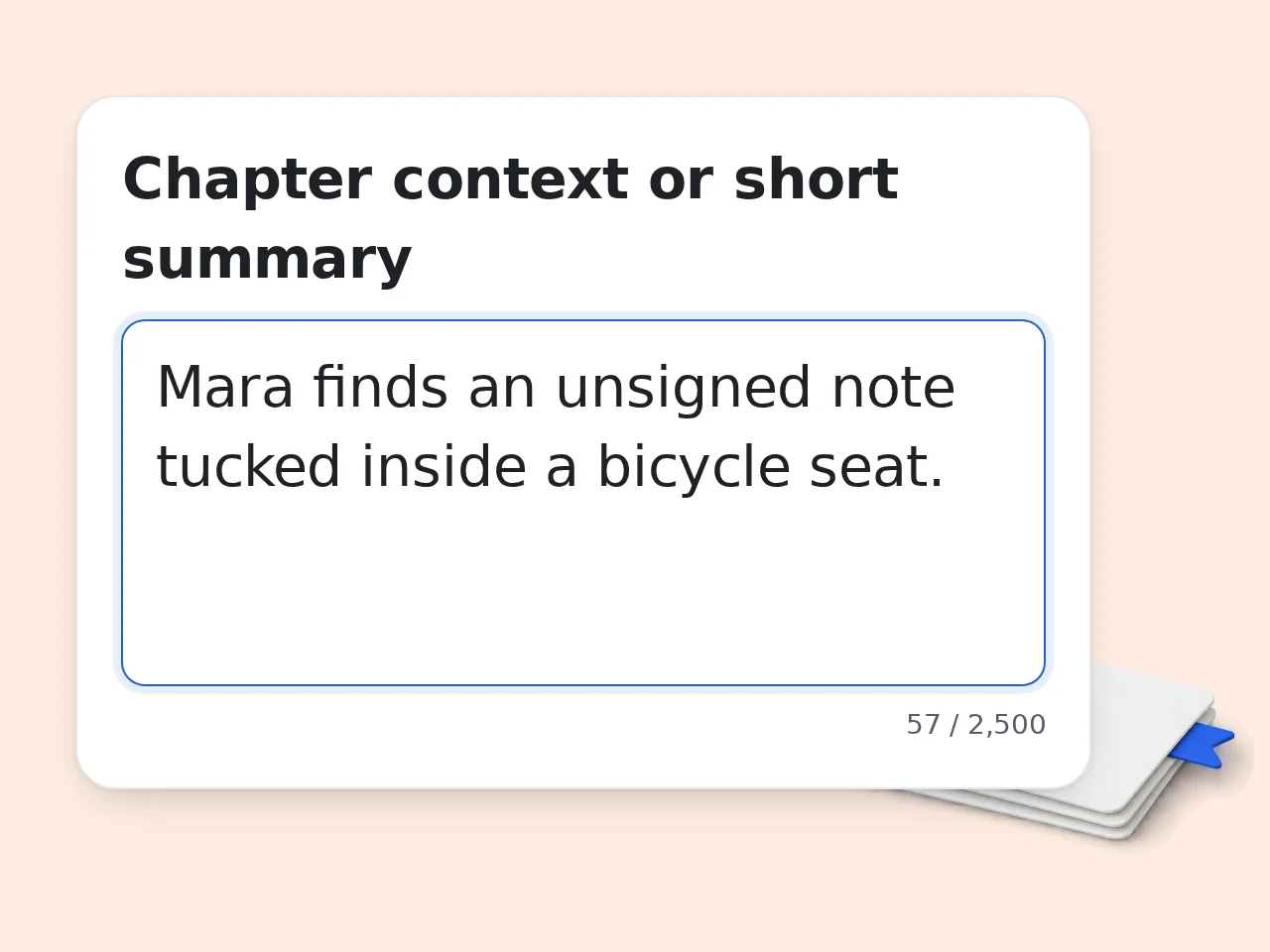
Describe the chapter
Paste a premise, summary, topic, promise, character conflict, reader problem, or chapter draft note. A rough paragraph is enough.
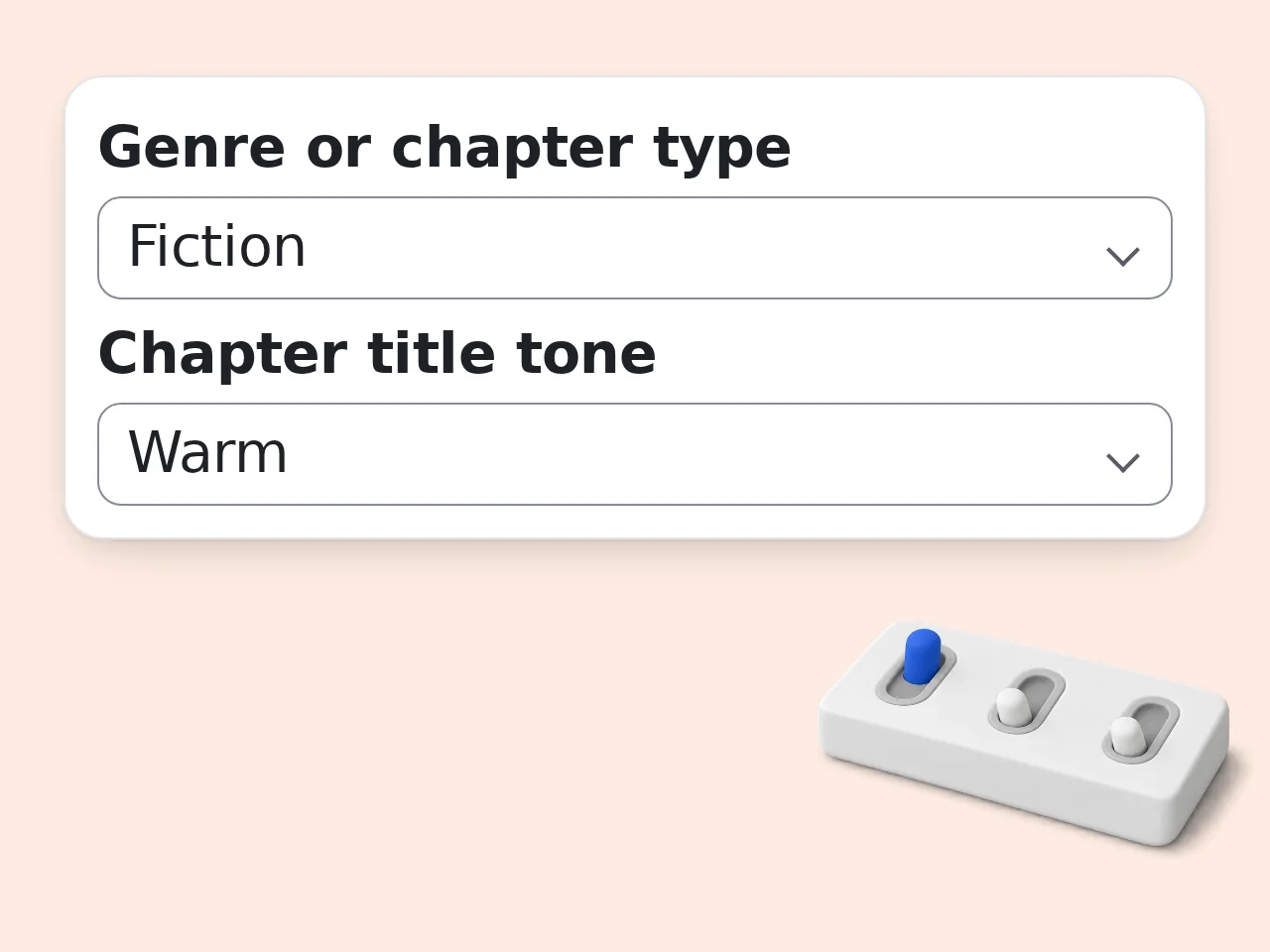
Choose genre and tone
Select the category and title mood. Add target readers or required words if the chapter needs a specific market or motif.
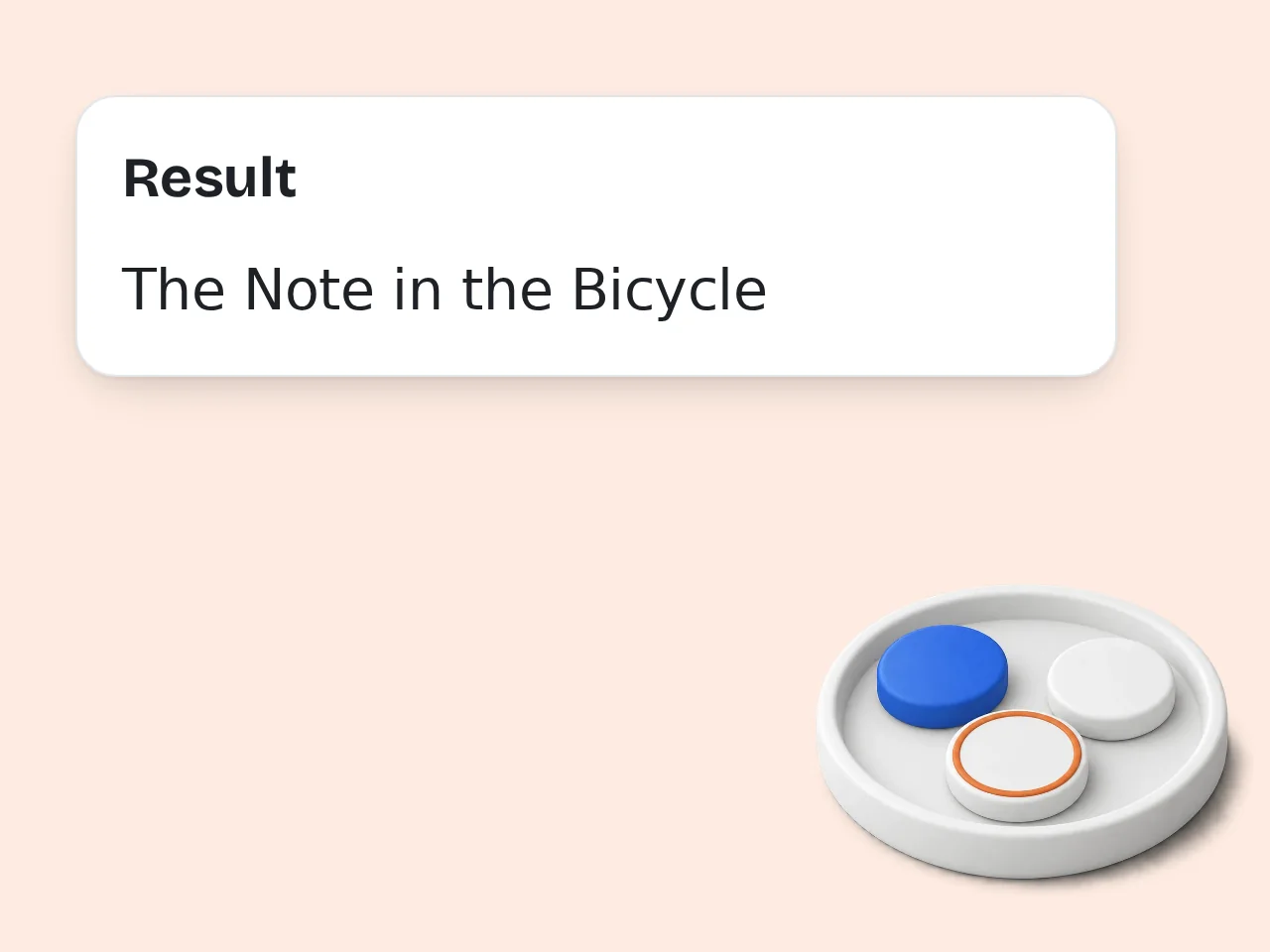
Compare and refine
Review the generated titles, note the strongest directions, then rerun with a sharper audience, bolder tone, or different keyword set.
Chapter Title Generator Features
Built for authors, editors, students, and web serial writers naming individual chapters
Genre-aware title ideas
Generate names that fit fiction, fantasy, romance, thriller, memoir, business, self-help, children’s chapters, and flexible chapter concepts.
Tone and reader controls
Guide the output toward literary, commercial, mysterious, bold, warm, or clear title styles while keeping the target reader in mind.
Shortlist with reasoning
Get several chapter title directions with quick notes so you can compare clarity, emotion, market fit, and originality before choosing.
Frequently Asked Questions About the Chapter Title Generator
Practical answers for naming fiction, nonfiction, memoir, and guide projects
What does a chapter title generator do?
A chapter title generator turns your premise, genre, audience, tone, and key ideas into title options you can actually compare. This chapter title generator does not only list random words. It creates short titles, chapter hook directions, commercial options, literary options, and safer alternatives. You can use the result to explore positioning, test reader expectations, and avoid staring at a blank page when the chapter draft or concept already exists. Use it as a naming workshop before you test a final shortlist.
How should I describe my chapter context?
Give the chapter title generator the clearest version of your idea in plain language. Mention the genre, central conflict, promise to the reader, setting, emotional hook, or the problem the chapter solves. You do not need polished copy. A rough paragraph is enough if it explains what makes the chapter different. For nonfiction, include the transformation. For fiction, include the character, stakes, mood, and memorable image. Better context gives the tool sharper, less generic title ideas.
Can I use these titles for a real used chapter?
You can use the titles as working options, but you should still check trademarks, marketplace conflicts, existing chapters, and domain or series fit before drafting. A chapter title generator can help with creativity and positioning, not legal clearance. Search chapterstores, Amazon, Google, library catalogs, and trademark databases when a title becomes serious. For important projects, ask an editor, agent, lawyer, or useer before final approval. This final check protects your cover, sales page, and author brand.
What makes a strong chapter title?
A strong title is easy to remember, fits the genre, hints at the promise, and gives the right emotional signal. It should not explain the entire chapter. Fiction titles often work through image, tension, sound, or mystery. Nonfiction titles often work through clarity, benefit, contrast, or authority. This chapter title generator balances those patterns so you get names that sound creative but still make sense to readers. The goal is a title that feels natural before anyone reads the description.
Can the tool create chapter hooks too?
Yes. If your chapter needs a chapter hook, include that request in the idea field or choose a more commercial tone. The chapter title generator can suggest a main title, chapter hook angle, and a short reason for each option. Subtitles are especially useful for nonfiction, memoir, business, self-help, and educational chapters because they explain the benefit while the main title stays memorable and compact. The best pair makes the promise clear without making the cover feel crowded.
Is it better for fiction or nonfiction?
It works for both, but the inputs should change. For fiction, describe the plot, world, protagonist, danger, relationship, or central image. For nonfiction, describe the reader, problem, method, outcome, and authority angle. The chapter title generator uses genre and tone to avoid making every answer sound the same. A thriller title should not feel like a productivity guide, and a children’s chapter should not sound like a corporate manual. This keeps the title aligned with the reader’s shelf and buying mood.
How many title ideas should I generate?
Start with one focused run, then repeat with a different tone or audience if the first set feels close but not perfect. A good chapter title generator session should give you a shortlist, not a final verdict. Save titles that create curiosity, match the shelf category, and are easy to say aloud. Then test the best few with readers, editors, friends, or ad copy before choosing. A second run is useful when the direction is right but the wording is not.
Can I include required words in the title?
Yes. Use the keywords field for words, motifs, names, symbols, or concepts you want included or considered. The chapter title generator may use those words directly, build around them, or suggest cleaner alternatives if they make the title awkward. Required words are helpful for series branding, SEO-oriented nonfiction, memoir themes, fantasy motifs, or titles that need to connect with an existing project. You can also ask for versions that avoid a word while keeping the same theme.
Why do some generated titles sound similar to existing chapters?
Many genres share familiar title rhythms, such as “The X of Y,” “How to X,” or short poetic fragments. A chapter title generator may produce phrases that feel close to known patterns because readers already recognize them. Treat that as a starting point, not a shortcut. Always search any promising title, adjust wording, and avoid copying a distinctive title from an existing chapter in your market. Small edits can keep the familiar rhythm while making the title ownable.
How do I choose the best title from the results?
Look for the title that matches the reader’s expectation and still feels specific to your chapter. Say it aloud, imagine it on a cover, and test whether it fits the genre shelf. The best option is usually not the cleverest line. It is the one readers can remember, understand, and repeat. Use the chapter title generator explanations to compare clarity, emotion, originality, and market fit. If two options feel close, choose the one that creates the clearest reader expectation.
Still have questions?
Contact our support teamTry the Chapter Title Generator Now
Turn your scene or section notes into chapter title ideas you can compare and refine.