Grammar Checker UK
British English proofreading without unnecessary rewrites
How to Use Grammar Checker UK
Review corrections and preferences as two different decisions.
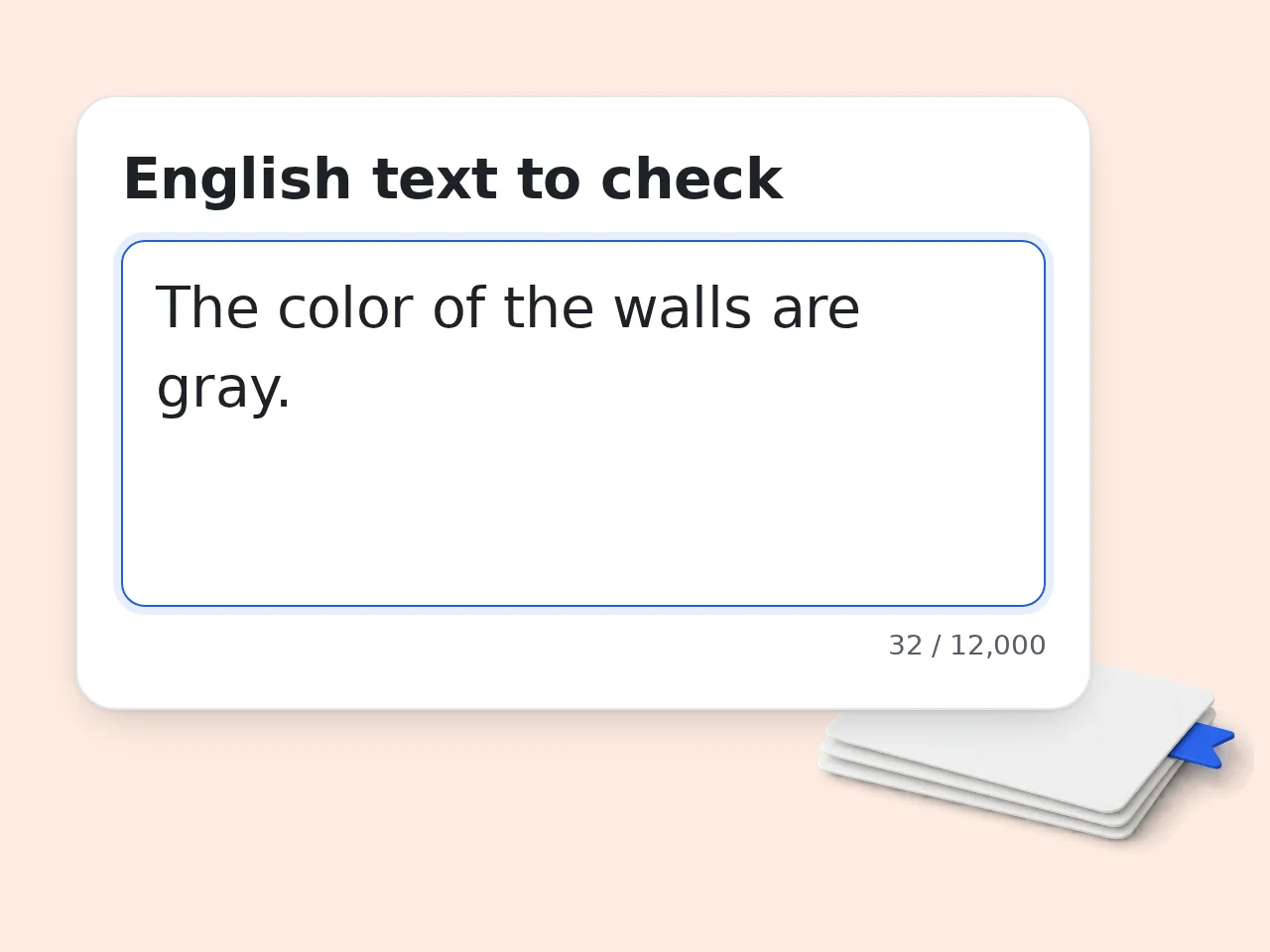
Grammar Checker UK: Paste English
Paste up to 12,000 characters with surrounding context and paragraph breaks. Remove details you do not need to share.
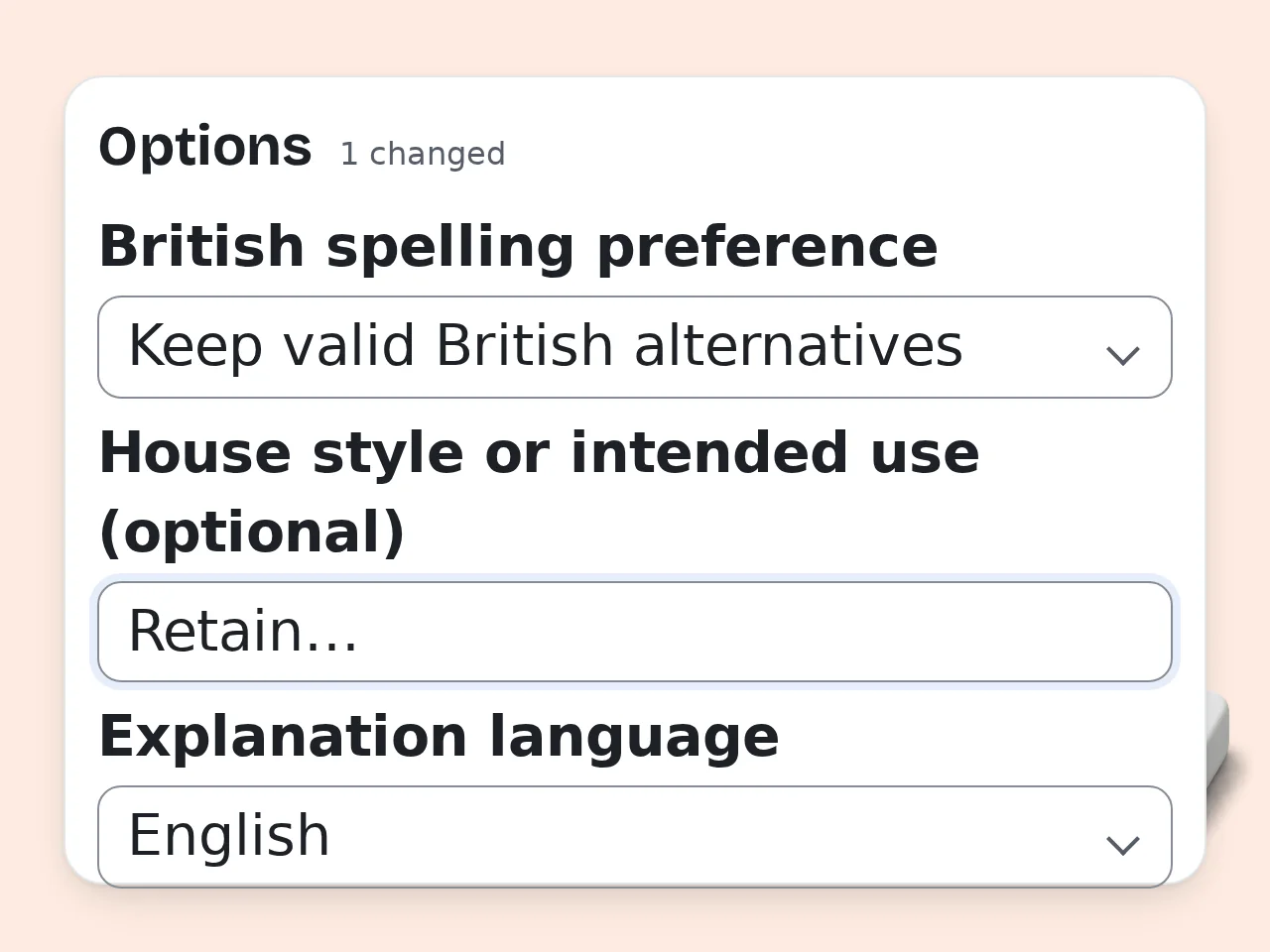
British Spelling Checker: Set Preferences
Choose a spelling policy, then add any house rules and protected wording. Leave preferences at their default if you only want obvious mistakes repaired.
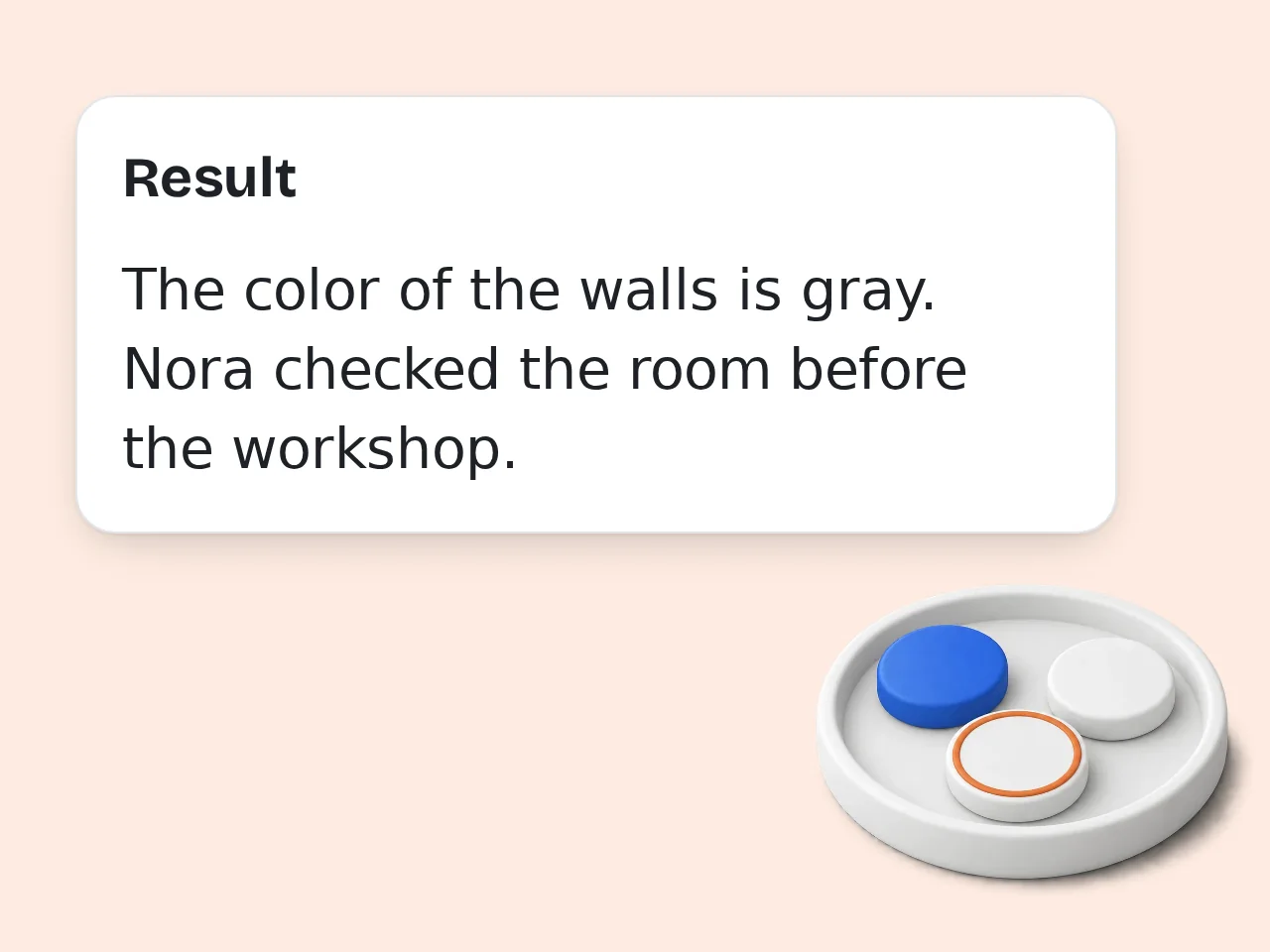
British English Grammar: Review Changes
Compare the error-only version with the source. Accept optional consistency patches individually, resolve any flagged uncertainty, and retain the final wording you intended.
Grammar Checker UK: What You Can Review
Grammar checker UK for writers and editors preparing copy for British readers.
British English Grammar: Necessary Repairs
Repair agreement, tense and punctuation without treating unfamiliar spelling as an error. The clean copy contains necessary repairs only; preferences stay separate.
UK Grammar Check: Spelling Choices
Keep valid British alternatives or request eligible -ise or Oxford -ize suggestions. See which proposed changes reflect your chosen convention, rather than a rule of grammar.
British English Proofreading: Protected Wording
Specify names, quotations or wording to preserve. A separate decision list explains uncertain cases, and a short house-style note records choices you can use when editing the next passage.
Grammar Checker UK: Questions and Examples
British spelling checker decisions, explained with practical cases.
What does this grammar checker UK actually do?
It checks English for grammar, spelling and punctuation mistakes, then separates those repairs from optional British usage preferences. You receive an error-only corrected passage, explanations and a separate list of consistency suggestions. For example, in ‘The colour of the walls are grey’, the verb should agree with ‘colour’, so ‘are’ becomes ‘is’. The British spellings remain. This is a review, not a guarantee that every mistake has been found or that your document follows a particular publisher's rules.
How do I use grammar checker UK effectively?
Paste a coherent passage, choose your spelling preference, and add any instructions your editor has given you. Mention a protected quotation or brand name before checking. For an email to a UK client, a brief note such as ‘professional but conversational; preserve product names’ supplies enough context. Review the necessary corrections before considering the optional patches. If a suggestion changes your meaning, keep the original and clarify the intended sense before checking that sentence again.
Is grammar checker UK free to try?
Yes, you can try the checker with included credits. Each check consumes credits, so free access does not mean unlimited checks. A guest starts with a daily allowance, while a free registered account receives a monthly allowance. Subscription plans provide credits according to the selected plan. The displayed cost shows what this request uses. Start with one representative paragraph to see whether the correction and preference lists suit your editing process.
How many credits are available for a UK grammar check?
Guests receive 10 credits per day, and free registered users receive 100 credits per month. Subscribers receive credits according to their plan. These are credit allowances, not promises of a fixed number of checks. The usable number of requests depends on the displayed per-check cost and your remaining balance. Other tools may consume a different amount, so do not convert the allowance into a universal generation count. Prepare the passage and its editorial instructions before submitting to avoid unnecessary repeated requests.
Can I use grammar checker UK without an account?
Guest access lets you submit a passage without registering, subject to the daily guest credits and applicable request limits. Creating a free account gives you the registered-user monthly allowance instead. You do not need to install a browser extension or upload a document for this tool: its input is pasted English text. Do not assume guest access means anonymous storage or a special confidentiality guarantee. Remove unnecessary personal details and check the site's privacy information before sharing material that requires confidential handling.
Does British English require organise instead of organize?
Not always. Both forms can be valid British English, depending on the convention. Oxford spelling uses -ize for eligible words, while many British publishers prefer -ise. Choose the policy that matches your document. This grammar checker UK lists such consistency changes separately instead of calling every -ize word an American mistake. Words such as ‘advertise’ and ‘analyse’ require their own treatment; a blanket letter substitution would be wrong. Without a house rule, keep valid forms consistent.
Can it explain practice, practise, licence and license?
Yes. In standard British usage, ‘practice’ is the noun and ‘practise’ is the verb; ‘licence’ is the noun and ‘license’ is the verb. The right spelling depends on the word's job in the sentence. Compare ‘Her practice starts at nine’ with ‘She practises every morning’. A British English grammar checker should inspect that context, not replace every occurrence with the same spelling. Names, titles and quoted material can follow different conventions, so list wording that must remain unchanged in the protected field.
Should a British collective noun take a singular verb?
Not necessarily. British English can treat a collective noun as a single unit or as its individual members, and verb agreement can reflect that meaning. The surrounding pronouns and context matter. ‘The team is ready’ presents the team as a unit; ‘The team are putting on their boots’ focuses on its members. Neither pattern should be changed mechanically. When the intended emphasis is unclear, the checker should preserve the wording and explain the choice, leaving the final decision to the writer.
Will it remove every Oxford comma or change quotation marks?
No. Serial commas and quotation-mark conventions often depend on a publication's house style. They should not automatically be labelled grammar errors simply because the intended readership is in the UK. Add a specific preference if your editor requires one. The optional consistency list can then show a proposed change and its reason, while necessary punctuation repairs remain separate. A comma that changes a sentence's meaning still needs attention. Read lists and quotations in context before accepting a suggestion that moves or removes punctuation.
How are American quotations and brand names handled?
Put exact wording that must remain unchanged in the protected field. This helps distinguish an intentional quotation, title or product name from an accidental switch between American and British spelling. For example, an American book title may contain ‘Color’ even when your surrounding prose uses ‘colour’. A UK consistency review should keep the title intact and discuss the surrounding text separately. Protection is an instruction to the AI, not a technical editing lock; compare the final passage with the source before reuse.
Can the checker resolve dates such as 03/04?
It should flag the ambiguity, not guess which date you intended. Numeric dates can represent different days under different conventions, and changing them without confirmation could alter a fact. After you confirm the meaning, writing the month in words can make the date clearer for readers in different countries. Add any required date format to your house-style note so the suggested presentation fits the document. A grammar review cannot verify a meeting date or appointment time against your calendar; check the source yourself.
Why use this instead of a general grammar fixer?
Choose this tool when the difficult part is deciding which changes are necessary and which merely reflect a British editorial preference. A generic corrected paragraph can hide that distinction. The grammar checker UK workflow returns an error-only passage alongside optional regional patches, protected wording decisions and a reusable house-style note. You can accept a subject–verb correction while declining a valid spelling change. For broader rewriting, plot feedback or detailed explanations of clause-joining errors, a tool focused on that separate task may fit better.
Still have questions?
Contact our support teamTry Grammar Checker UK on Your Draft
Check one passage, compare the necessary repairs, and decide which British style suggestions to keep.