Third Person Limited Converter
Transform your writing into third person limited point of view with AI-powered precision
How to Use
Master third person limited writing in three simple steps
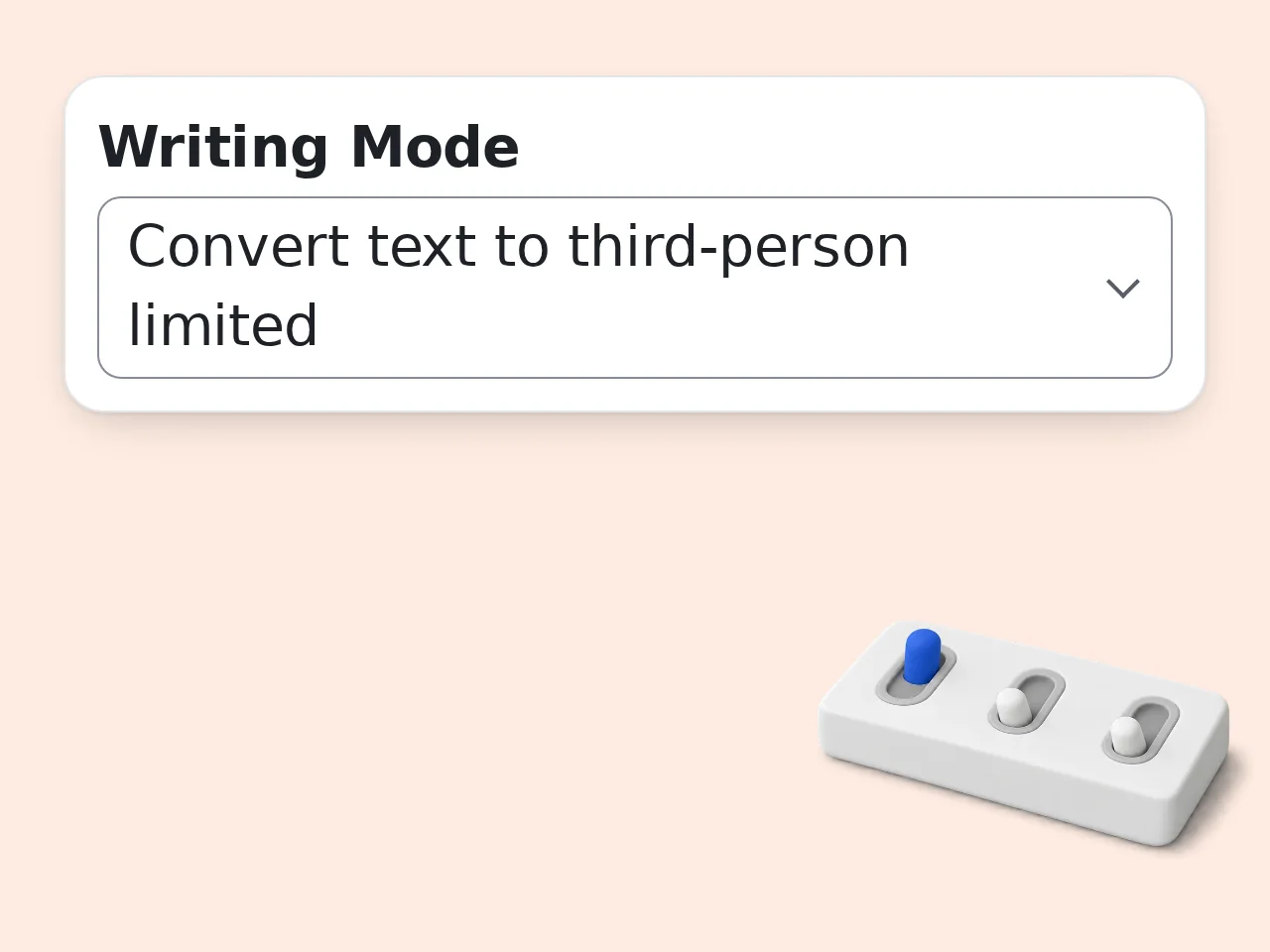
Choose Your Mode
Select whether you want to convert existing text, generate new content, or analyze your writing for perspective consistency. Each mode is optimized for different stages of the writing process.
Enter Your Content
Paste your text for conversion or analysis, or describe the scene you want to generate. Specify the character whose perspective you want to follow, as third person limited focuses on one character's viewpoint.
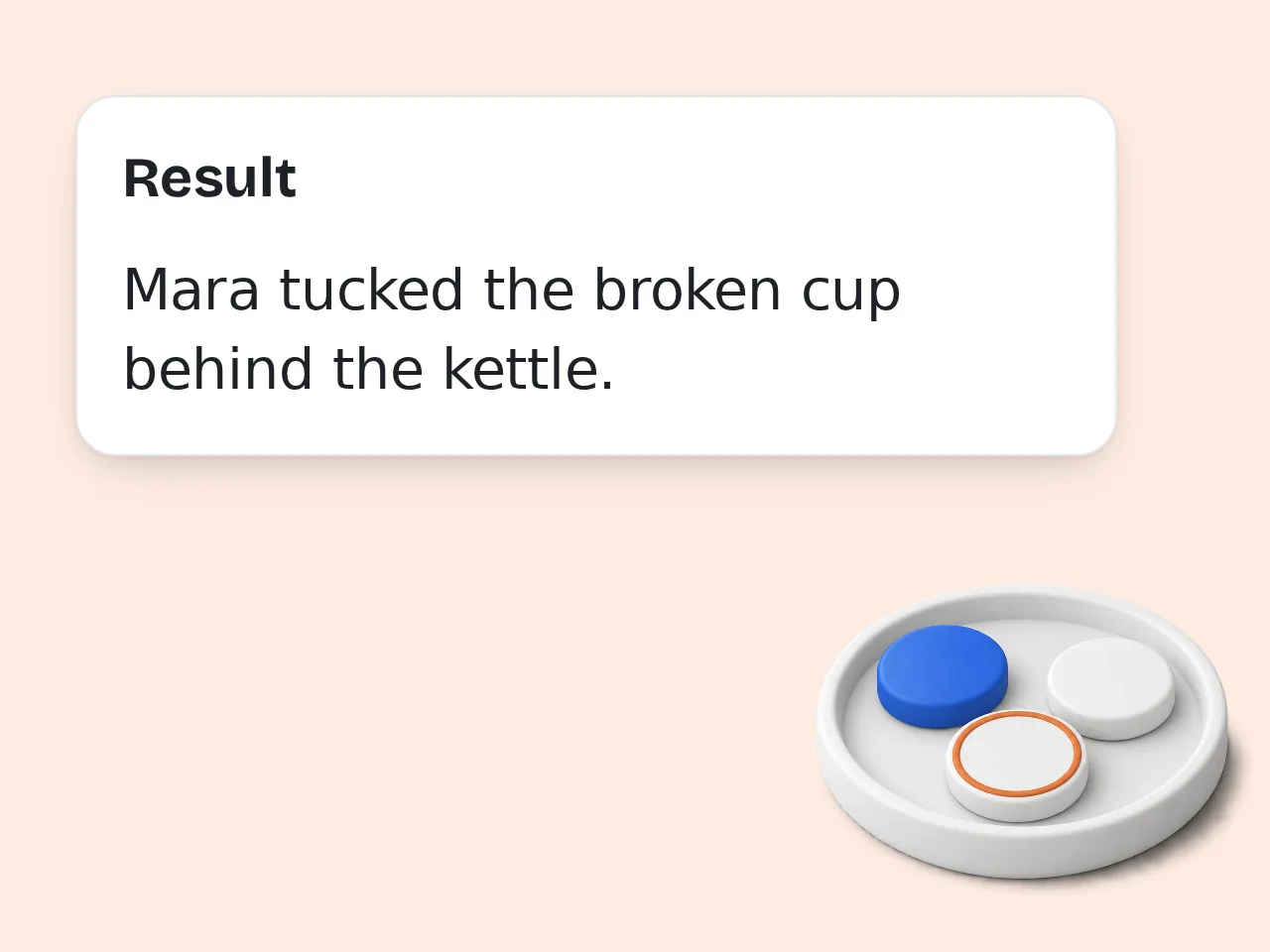
Refine and Download
Review the AI-generated output in third person limited point of view. Make adjustments to genre, tone, or character focus as needed, then copy or download your refined text for your project.
Key Features
Powerful tools for mastering third person limited narration
Perspective Conversion
Instantly convert any text into third person limited point of view while maintaining narrative coherence and character focus. The tool preserves your original meaning while shifting the perspective to follow one character's thoughts and experiences.
Content Generation
Generate original stories, scenes, or paragraphs in third person limited narrator style. Specify your character and scenario, and receive professionally-crafted content that stays within your chosen perspective throughout.
Perspective Analysis
Detect and correct perspective inconsistencies in your writing. The analyzer identifies where your text breaks third person limited rules and suggests corrections to maintain consistent viewpoint throughout your narrative.
Frequently Asked Questions
Everything you need to know about third person limited perspective
What is third person limited?
Third person limited is a narrative perspective using third-person pronouns (he, she, they) but restricted to one character's thoughts and experiences. The narrator knows only what this focal character knows and feels. Unlike third person omniscient with access to all minds, limited perspective follows one consciousness, creating intimacy while maintaining narrative distance. This allows deep character connection without first-person restrictions. Many bestselling novels use this technique because it balances emotional engagement with storytelling flexibility.
How do I use this third person limited converter?
Select your writing mode: convert text, generate content, or analyze consistency. For conversion, paste your text and name the focal character whose perspective you want. The AI rewrites content to match that character's knowledge and sensory experience. For generation, describe your scene and character to receive original third person limited narrator content that stays within one viewpoint. Analyzer mode scans for perspective breaks where narration exceeds the character's awareness, flagging inconsistencies. Adjust genre and tone settings to match your story's style and mood.
Is this tool completely free?
Yes, this third person limited writing tool can be tried with included credits, with no hidden charges and no subscription required. Convert text, generate passages and analyze your writing, subject to your balance. Professional-quality perspective writing remains accessible to all authors, students and creative writers regardless of budget. No registration is required for basic use, though creating an optional free account provides 100 credits each month; save your work in your own documents. Free access includes all three modes: conversion, generation and analysis for third person limited point of view with full functionality.
How many times can I use this tool?
This third person limited converter uses credits for each run. Process text, generate passages and run analyses within your available credit balance. Each session supports up to 5,000 characters of input text and uses the displayed credit cost. Whether converting a single paragraph or working through an entire novel chapter by chapter, you can use the tool within your available credits and usage limits. This credit-based access makes it highly practical for long-term writing projects, classroom use or extensive revision work ensuring consistent third person limited perspective throughout your manuscripts.
Do I need to create an account?
No account is required to use the third person limited writing tool. Access all features immediately without registration or login. Simply visit and start converting, generating or analyzing text in third person limited point of view. However, optional free accounts provide 100 credits each month; copy or download your results to manage projects in your own files. For quick one-time conversions or assignments, no-account works perfectly. Choose based on whether you prefer immediate convenience or a monthly credit allowance.
What is third person limited vs omniscient?
Third person limited vs omniscient marks the fundamental distinction in narration styles. Limited restricts knowledge to one character's perspective—seeing and feeling only what they experience. Third person omniscient has godlike knowledge of all characters' thoughts simultaneously, revealing multiple viewpoints and events beyond any single character's awareness. Limited creates intimacy and suspense through restricted viewpoint, while omniscient offers broader scope and complete understanding of all story elements.
Can I switch characters in third person limited?
Yes, switch between characters in third person limited, but maintain one focal character per section. Many novels alternate viewpoints by chapter or scene break. Within single scenes, switching (head-hopping) confuses readers and breaks intimacy. Use clear transitions like chapter breaks or section divisions when changing viewpoints. This tool processes each section separately, maintaining designated character perspective. For multi-viewpoint novels, convert chapters individually with different character names.
What are common mistakes in third person limited writing?
Head-hopping is most common: jumping between characters' thoughts within scenes, breaking limited perspective. Omniscient slips reveal facts the viewpoint character couldn't know, like hidden feelings or distant events. Some writers tell focal character's appearance from outside rather than through self-awareness. The analyze mode catches these breaks automatically, highlighting where narration exceeds third person limited boundaries. Consistent practice and revision maintain proper viewpoint discipline throughout narratives.
Which genres work best with third person limited?
Third person limited point of view works across literary fiction, romance, thriller, mystery, fantasy, and science fiction. Romance uses alternating viewpoints showing both love interests. Thrillers benefit from limited suspense as readers know only protagonist discoveries. Fantasy and sci-fi gradually reveal worlds through character exploration. Literary fiction appreciates psychological depth. Mystery maintains suspense by limiting readers to detective knowledge. This versatility makes third person limited the most popular narrative choice in contemporary fiction.
How does this tool maintain character voice?
The tool filters all descriptions and narrative language through the specified character's perspective and vocabulary. Naming your focal character adjusts word choice and observations to match what they'd notice and think. Child viewpoints use simpler language; educated adults employ sophisticated vocabulary. Narrator tone reflects emotional state: anxious characters notice threats, optimistic ones see opportunities. This creates authentic third person limited narrator style where narrative voice echoes character consciousness.
Can I use this for academic writing assignments?
Yes, this tool helps students learning creative writing and narrative techniques. Many courses require writing in third person limited point of view. Use the converter to understand perspective's storytelling impact or generate study examples. The analyzer checks homework for consistency before submission. For essays analyzing literature, it demonstrates narrative mode differences. However, generated content should serve as learning examples or starting points, not submitted as original work without disclosure per academic integrity policies.
What makes third person limited effective for storytelling?
Third person limited balances intimacy and flexibility for modern storytelling. It provides close psychological access to focal character's thoughts, creating emotional connection like first person while maintaining narrative distance through third-person pronouns. This allows smoother transitions between time periods or viewpoints than first person permits. Limited knowledge creates natural suspense as readers discover developments with the character. Writers choose different focal characters per section, providing multiple perspectives while maintaining intimacy. This combination explains why third person limited dominates contemporary fiction.
Still have questions?
Contact our support teamStart Writing in Third Person Limited Now
Transform your writing with professional third person limited perspective. Free to try with included credits and ready to use.