Unreliable Narrator Generator
Create unreliable narrator stories with deceptive, twisted, or biased narration
How to Use
Three steps to generate unreliable narrator fiction
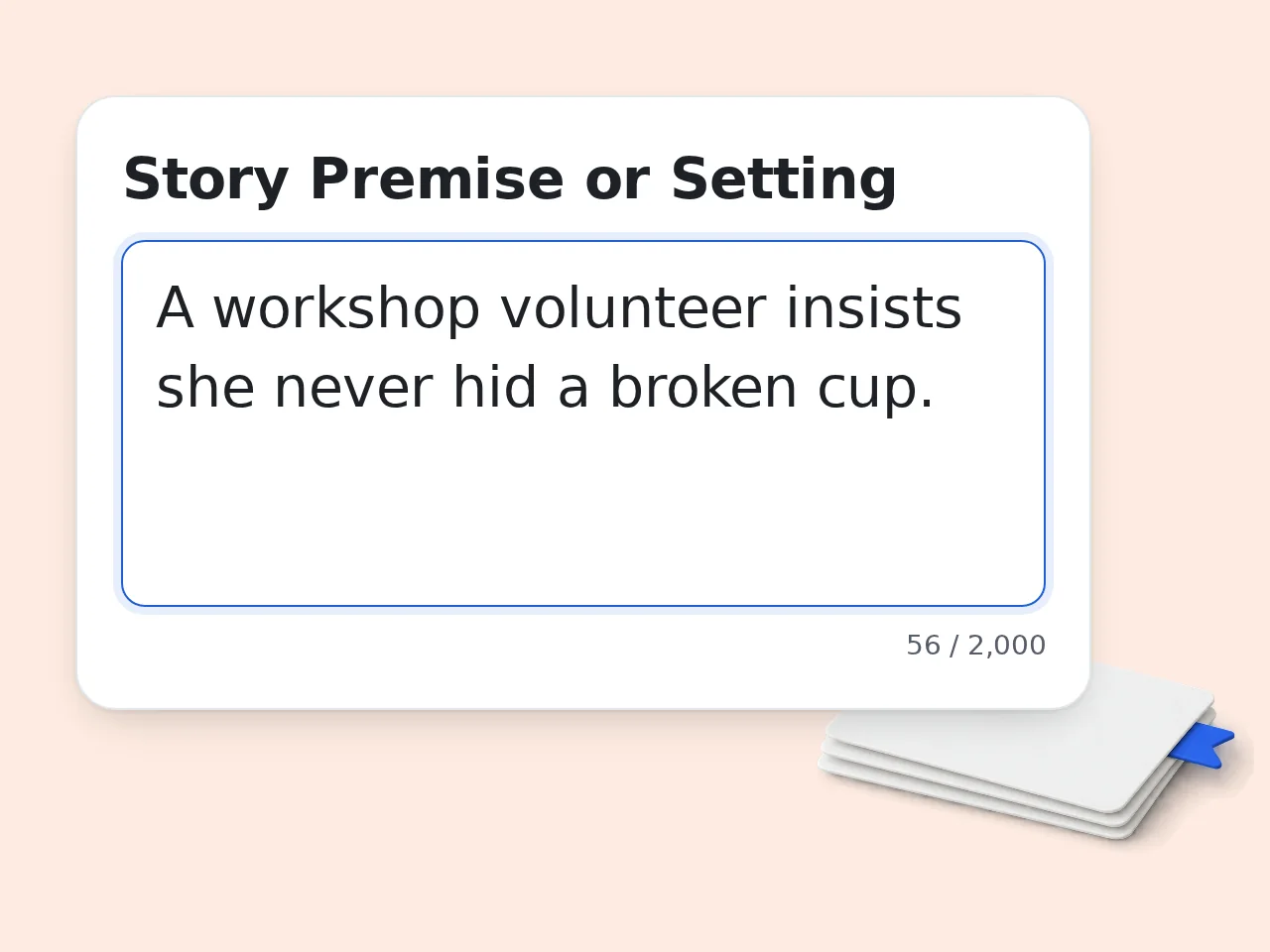
Describe Your Story
Enter the premise or setting—a crime investigation, a childhood memory, a relationship breakdown, or any situation where perspective matters. This becomes the event your unreliable narrator will recount with bias, deception, or distorted perception.
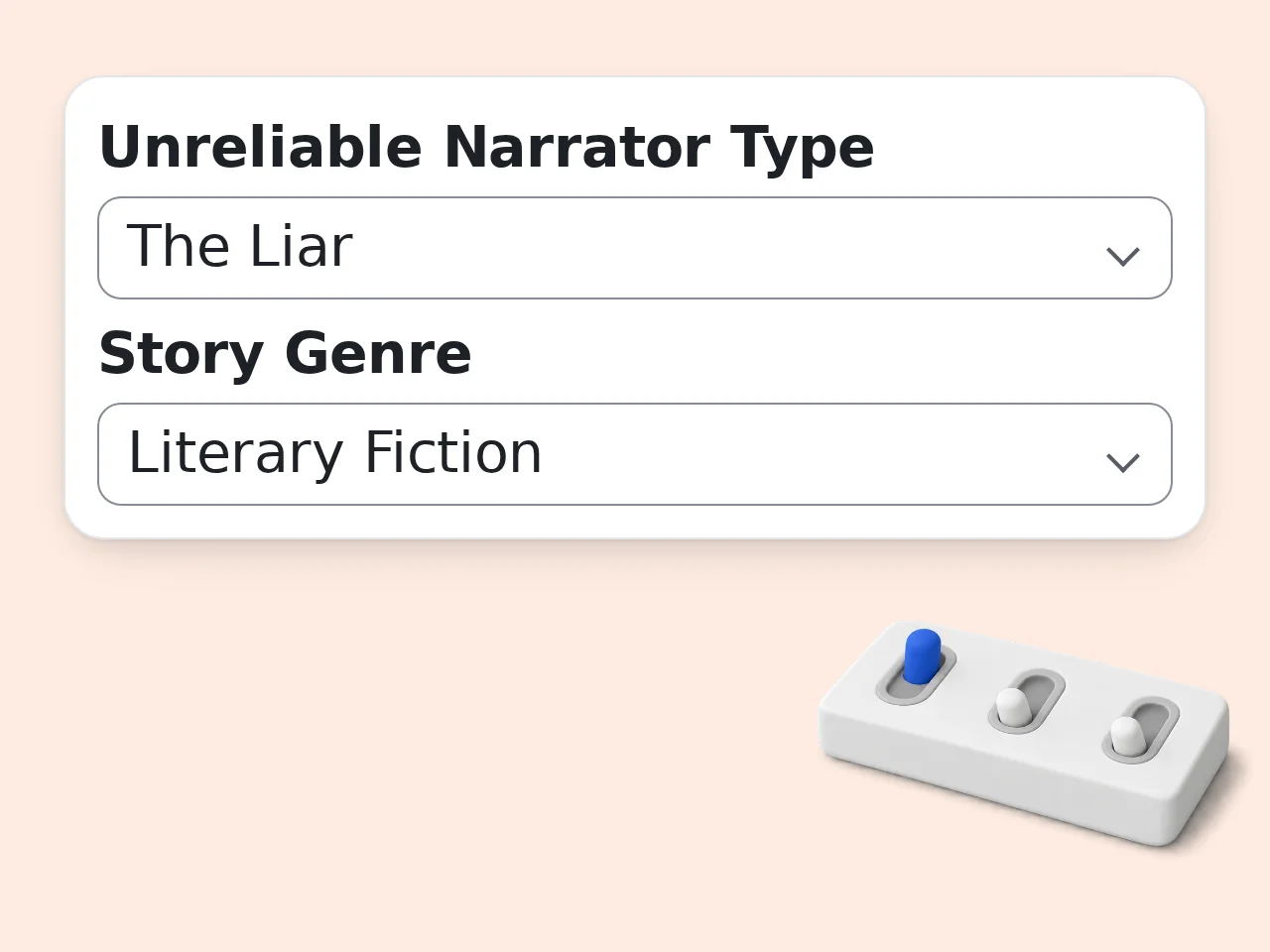
Select Narrator Type
Pick which kind of unreliable narrator fits your story best. The Liar deliberately misleads readers, the Madman perceives incorrectly due to mental state, the Naïf lacks understanding, the Picaro embellishes events for self-aggrandizement, and the Clown deflects truth through humor.
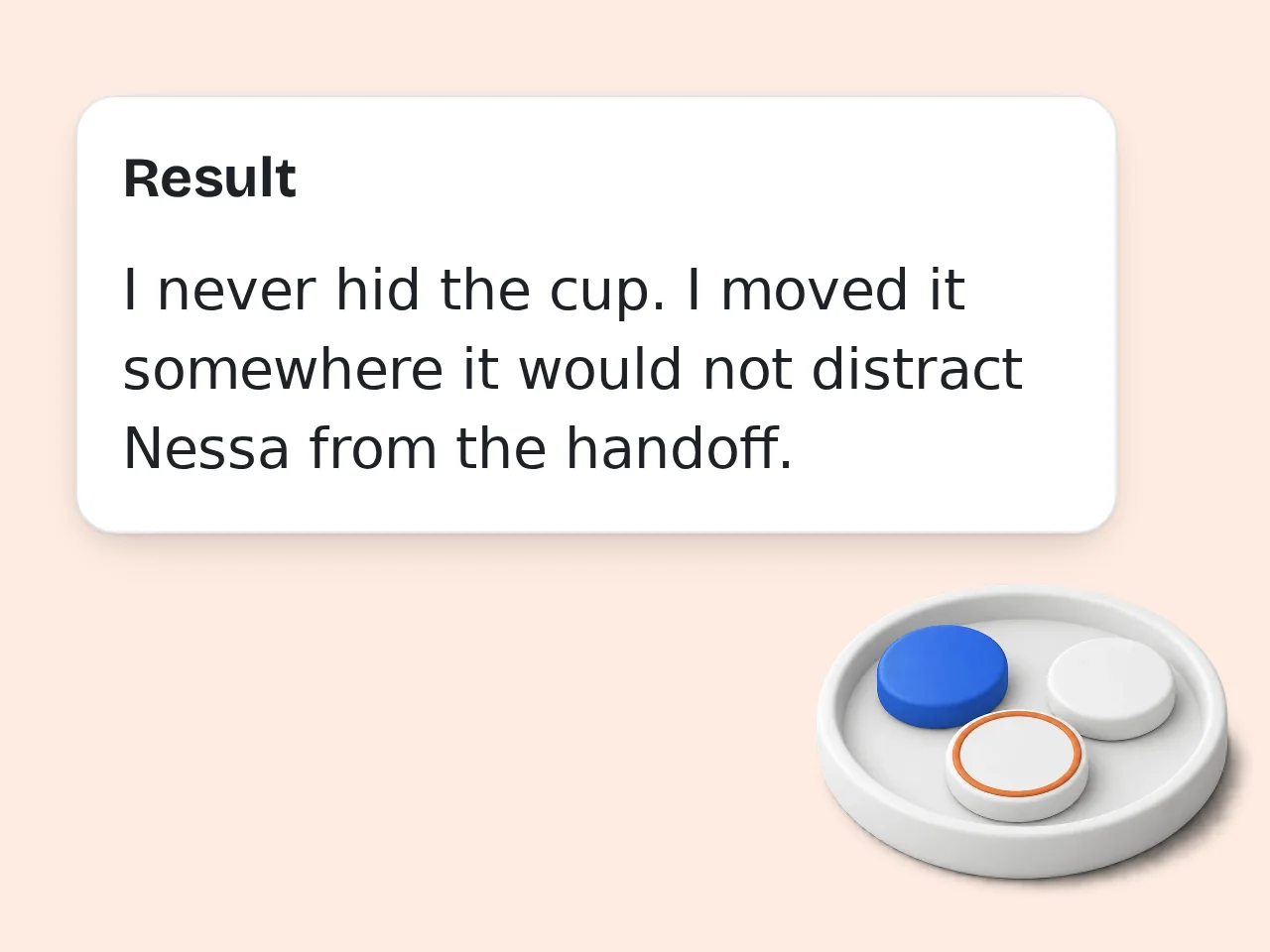
Generate and Refine
Click generate to receive an unreliable narrator passage where the AI embeds contradictions, omissions, or distortions that reveal credibility issues. Adjust settings like unreliability level and writing style, then regenerate to explore different unreliable narrator approaches for your specific project needs.
Key Features
Tools for crafting unreliable narrator fiction
Five Narrator Types
Choose from Liar (intentional deception), Madman (distorted reality), Naïf (innocent misunderstanding), Picaro (exaggerated bravado), or Clown (humor masking truth). Each unreliable narrator type creates different narrative tension and reader engagement patterns suited to specific genres.
Adjustable Unreliability
Control how much your unreliable narrator distorts events. Subtle hints reveal small inconsistencies readers might initially overlook, moderate contradictions create obvious doubts prompting active questioning, and extreme unreliable narrator distortion completely warps reality for dramatic plot revelations.
Multiple Writing Styles
Generate unreliable narrator passages in first-person confessional, stream of consciousness, diary entries, letters, or interview transcripts. Each format enhances the unreliable narrator effect differently depending on your chosen genre and specific storytelling goals for unreliable narrator fiction.
Frequently Asked Questions
Common questions about the Unreliable Narrator Generator
What is an unreliable narrator?
An unreliable narrator is a storytelling technique where the narrator's credibility is compromised, making their account of events questionable or false. Classic examples include the mentally unstable narrator in Edgar Allan Poe's The Tell-Tale Heart or the memory-distorted narrator in Gillian Flynn's Gone Girl. These storytellers mislead readers through deliberate lies, mental delusions, limited understanding due to youth or naivety, or biased perspectives shaped by self-interest. The technique creates suspense as readers gradually detect inconsistencies between what the narrator claims and what actually occurred.
How do I use this tool?
Enter a story premise describing the situation or event your narrator will recount—for example, witnessing a crime, recalling a traumatic childhood experience, or explaining a failed relationship. Select one of five narrator types based on the psychological source of unreliability: Liar, Madman, Naïf, Picaro, or Clown. Choose your preferred genre, writing style like first-person confessional or diary format, and unreliability level from subtle to extreme. Click generate, and the AI produces a story passage embedding contradictions, omissions, or distortions characteristic of your chosen narrator type.
Is this tool free to use?
Yes, the tool is free to access. Without logging in, you get up to one story generation per day at the base-tier cost if your shared daily guest credits are unused. Use it to experiment with different narrator types and story premises. Free registered accounts receive up to 20 generations per 30-day credit allowance at the base-tier cost if those credits are not used on other tools, which you can use for exploring various narrative techniques across multiple creative writing projects. Subscribed users access higher generation limits for extensive professional work on novels or short story collections. All tiers generate full story passages with embedded narrative techniques, adjustable narrator types and multiple writing styles to match your genre preferences.
How many narrator types are available?
The tool offers five distinct narrator types based on established literary analysis frameworks. The Liar intentionally deceives readers to hide truth or protect themselves from consequences. The Madman suffers from mental instability that causes genuinely distorted perception of reality. The Naïf lacks sufficient experience or maturity to understand events accurately, common in child narrators. The Picaro exaggerates and embellishes events to make themselves appear more heroic or admirable than reality warrants. The Clown uses humor and deflection to mask uncomfortable truths or avoid confronting painful reality directly.
Do I need an account?
No account is required for basic access. Unregistered users receive up to one story generation per day at the base-tier cost if their shared daily credits are unused, which can be used to test different narrator types and explore the narrative technique. Creating a free account provides 100 credits every 30 days, enough for up to 20 base-tier generations if not used on other tools; copy useful passages into your own notes for reference when developing longer creative writing projects. Guests and registered users can both choose from five writing styles and three unreliability levels in the form. Registration takes about one minute with just an email address, and no payment information is ever required for the free tier.
What are unreliable narrator examples in literature?
Classic literary examples include Humbert Humbert in Vladimir Nabokov's Lolita, whose obsessive first-person narration distorts his predatory behavior as romance. The unnamed narrator in Chuck Palahniuk's Fight Club conceals a crucial identity twist from readers throughout the entire story. Pi Patel in Yann Martel's Life of Pi offers two contradictory accounts of his survival at sea, forcing readers to choose which version they believe. Amy Dunne in Gone Girl deliberately manipulates her diary entries to frame others and control how readers perceive unfolding events.
Can I adjust how unreliable the narrator is?
Yes, the tool offers three adjustable unreliability levels that control narrative distortion intensity. Subtle unreliability drops small hints through minor contradictions in timeline details or occasional implausible claims that readers might initially overlook, creating slowly building suspense. Moderate unreliability creates obvious doubts through clear contradictions between what the narrator says and observable facts in the story, prompting readers to actively question the account. Extreme unreliability completely warps reality with hallucinations, massive omissions of crucial events, or entirely fabricated scenarios often used for dramatic plot reveals.
What writing styles does the tool support?
The generator supports five writing styles that each enhance narrative unreliability differently. First-person confessional mimics a narrator directly addressing readers to justify or explain their actions, which is common in crime narratives and psychological thrillers. Stream of consciousness presents unfiltered thoughts as they occur, revealing mental instability or confusion through fragmented syntax and illogical connections. Diary or journal format allows contradictions to appear across different entries as memory shifts or the narrator's mental state deteriorates over time.
What is the unreliable narrator definition?
The term describes a first-person narrator whose credibility readers must question due to factors like mental instability, personal bias, limited knowledge, deliberate deception, or self-delusion about their own role in events. Literary critic Wayne Booth introduced this analytical term in 1961 to describe narrators whose versions of events diverge significantly from the story's implied truth. Narrative unreliability manifests through internal contradictions, implausible claims about events or other characters, suspicious omissions of important information, or statements that other characters directly contradict within the text.
Which genres work best with unreliable narrators?
Narrative unreliability excels in psychological thrillers where the narrator's twisted perspective creates suspense and enables plot twists that recontextualize earlier events. Literary fiction employs the technique to explore themes of memory fallibility, identity fragmentation, and the subjective construction of truth. Mystery and crime stories use these narrators strategically to misdirect readers before crucial revelations. Horror benefits from narrators whose sanity readers question, which intensifies dread and maintains ambiguity about whether supernatural events actually occurred or exist only in the narrator's disturbed mind.
Can I use generated stories commercially?
Generated passages serve primarily as creative starting points and writing practice exercises rather than finished publishable work. Writers use them to explore narrative techniques, develop distinctive character voices for their projects, or practice embedding contradictions and distortions into storytelling. Authors typically revise and expand AI-generated content significantly before publication, adding their unique stylistic voice, deeper characterization, richer thematic complexity, and original plot development. For commercial projects like novels or short story collections, treat generated text as an initial draft to refine substantially with your creative vision and personal writing style.
How does this help me learn writing techniques?
The tool demonstrates narrative mechanics through concrete examples rather than abstract theoretical definitions. Generate multiple versions using different narrator types to observe how the Liar's deliberate deception creates different effects than the Madman's genuinely distorted perception or the Naïf's innocent misunderstanding. Adjust unreliability levels to see how subtle hints create different reader experiences compared to extreme distortion. Study how the AI strategically embeds contradictions, places omissions at key moments, and introduces implausible claims while maintaining the narrator's consistent voice throughout the passage.
Still have questions?
Contact our support teamCreate Your Unreliable Narrator Story
Generate fiction with twisted perspectives and deceptive narration. Choose your narrator type and start writing.