Chapter Outline Planner
Plan one focused, draft-ready book chapter before you start writing
How to Build a Chapter Outline in Three Steps
Give the chapter a job, set its boundaries, and get a drafting map
Describe This Chapter's Job
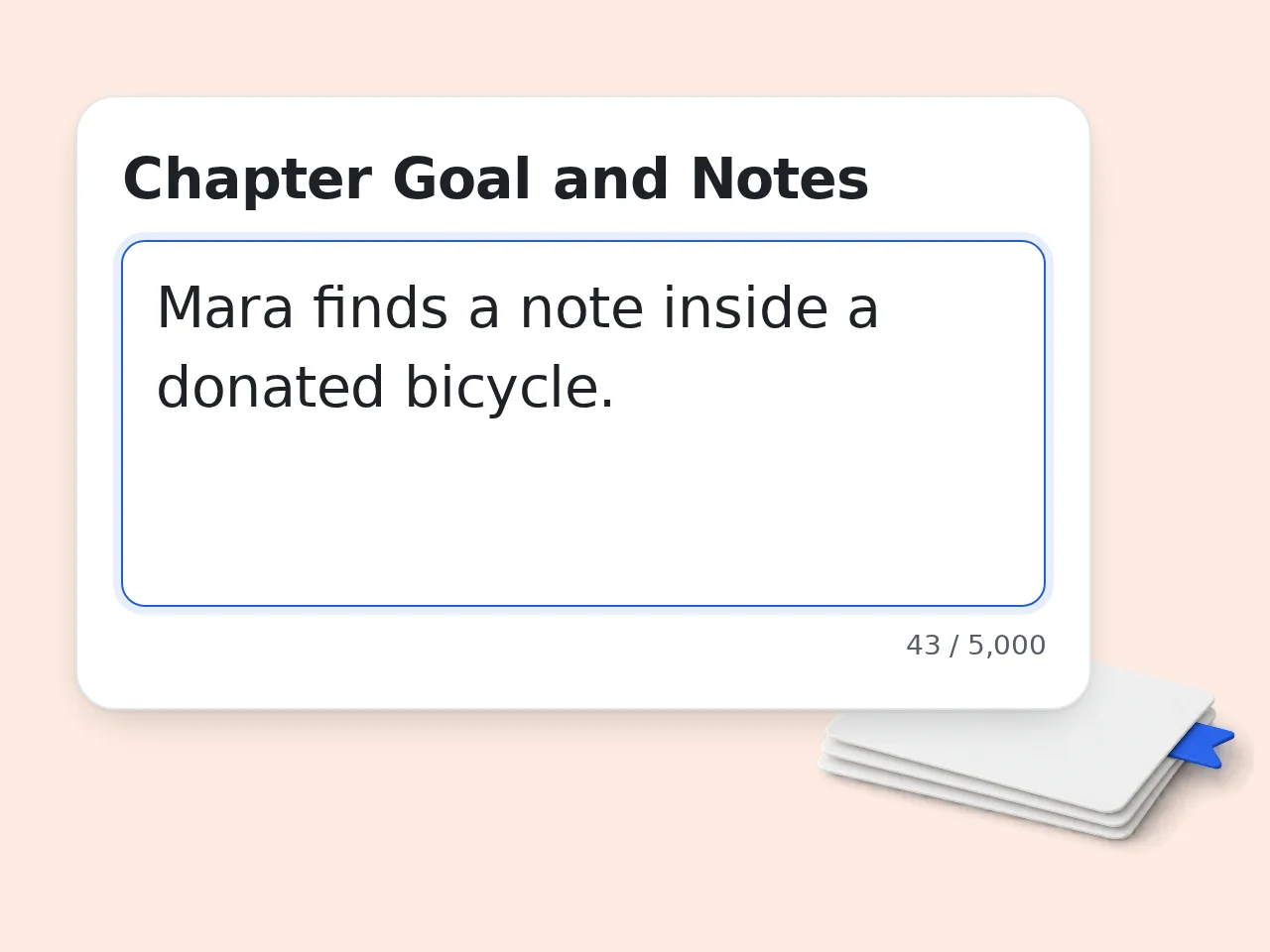
Paste the notes, argument, scenes, or rough plan for one chapter. State what the chapter must accomplish instead of summarizing the entire book. A few concrete details produce a more useful chapter outline.
Add Boundaries and Constraints
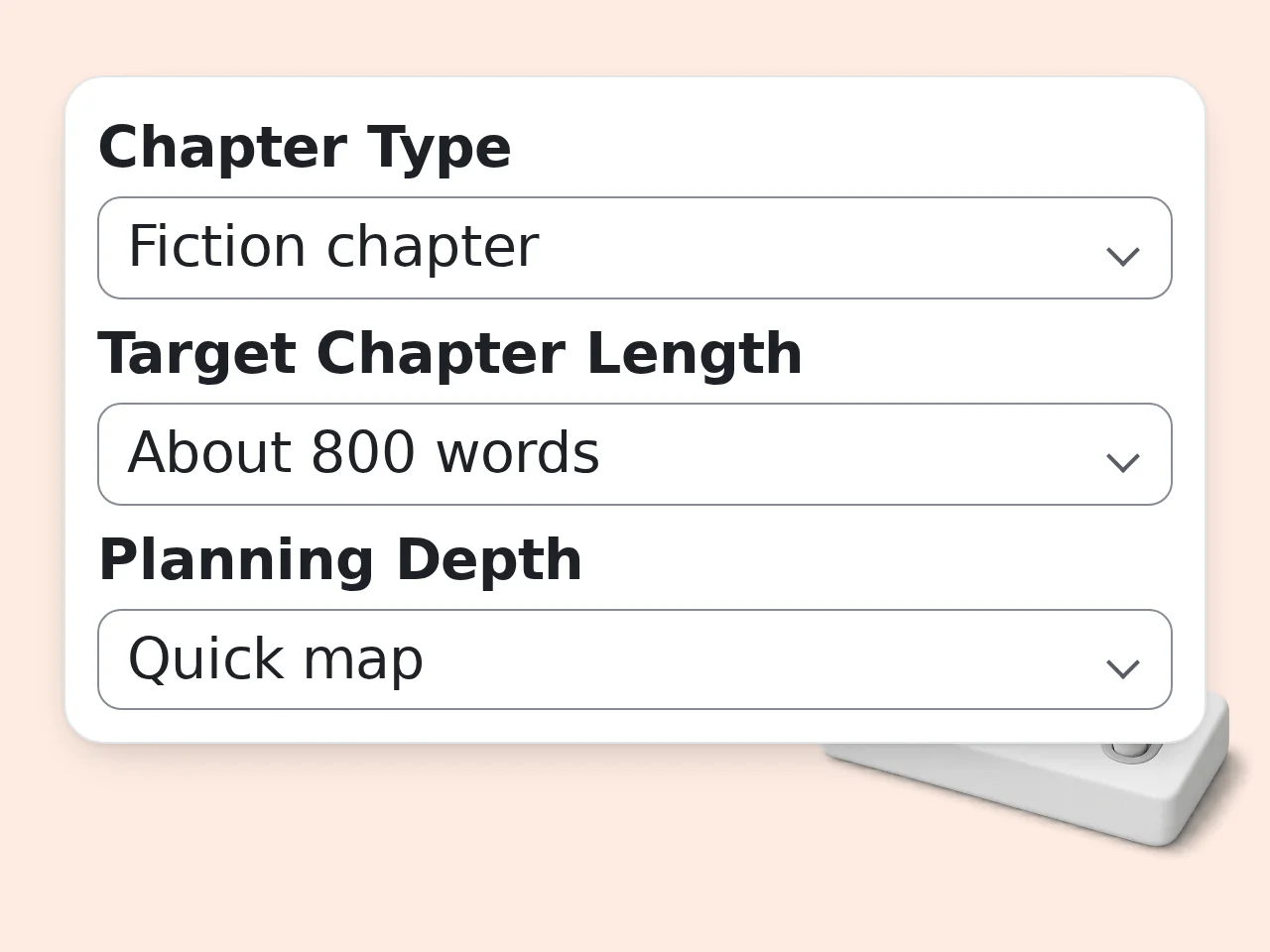
Choose fiction, nonfiction, memoir, or hybrid mode. Add the previous and next chapter context, target length, planning depth, and any facts, scenes, examples, exercises, clues, or reveals that must remain.
Draft From the Ordered Map
Use the word-budgeted sequence, continuity ledger, risk check, and completion test as your working chapter plan. Revise any flagged gap first, then draft each scene or section in order without reopening every structural decision.
Chapter Outline Features for One-Chapter Planning
Make one chapter coherent, connected, and ready to draft
Chapter Job and Change Map
Define why the chapter exists, what the reader or character knows at the start, and what must be different at the end. The resulting chapter outline gives every scene or section a measurable job.
Scene or Section Word Budget
Allocate 800, 1,500, 2,500, or 4,000 words according to structural importance. Fiction beats receive room for choice and consequence; nonfiction sections receive room for claims, examples, and reader action.
Adjacent-Chapter Continuity Check
Track what arrives from the previous chapter and what the next chapter needs. The planner flags missing setup, repeated information, timeline breaks, unsupported claims, and weak transitions before they reach the draft.
Frequently Asked Questions About a Chapter Outline
Practical answers for planning one chapter inside a larger manuscript
What is a chapter outline, and what should it contain?
A chapter outline is a working map for one chapter, showing its purpose, ordered scenes or sections, major transitions, and intended ending. It explains what the chapter changes instead of listing attractive headings without a plan. For fiction, it can track goals, obstacles, choices, consequences, and reveals. For nonfiction, it can track claims, explanations, evidence, examples, exercises, and takeaways. Add a word allowance and adjacent-chapter dependencies so the outline guides drafting rather than becoming a decorative table of contents.
How do I use this chapter outline planner effectively?
Describe the job of one chapter, choose its type, and provide any material that must appear. Add what the previous chapter established and what the next chapter will need when continuity matters. Select a target word count and planning depth. The planner then assigns each scene or section a purpose, transition, and approximate share of the chapter. Review the risk check before drafting. Resolve missing facts, repeated beats, unclear handoffs, or unsupported claims while changes are still inexpensive.
Is the chapter outline tool free to use?
Yes. You can try the chapter outline tool with the credits included for your user type. Guests receive 10 credits each day, and registered free users receive 100 credits each month. Each request uses the credit cost shown for this tool. Subscribers receive additional credits according to their plan, so available use depends on the current balance and per-request cost rather than a fixed generation count. Check the credit indicator before submitting a long or detailed chapter brief.
How many free credits can I use for a chapter outline?
Guests receive 10 free credits per day, while registered free users receive 100 free credits per month. Subscribers receive more credits according to the subscription plan attached to their account. A request consumes the current chapter outline credit price displayed by the tool. Because costs can differ between tools and user types, credits cannot honestly be converted into one fixed number of outlines. Use a focused brief and include all constraints in one request to make each result more useful.
Can I create a chapter outline without making an account?
Yes. A guest can create a chapter outline without registering, using the guest allowance of 10 credits per day. An account is optional for the first planning request. Registered free users receive 100 credits per month and can use account features available on the site. Subscribers receive plan-based credits. The number of usable requests depends on the tool's current credit cost, not a promised daily count. Keep a copy of the result if you plan to continue drafting elsewhere.
Can the planner make both fiction and nonfiction chapter outlines?
Yes. The planner changes its structural test according to the chapter type instead of forcing every project into a novel beat sheet. Fiction chapters emphasize pressure, choice, consequence, revelation, and emotional movement. A nonfiction chapter outline emphasizes one reader promise, ordered claims, explanation, credible evidence, examples, exercises, and a useful takeaway. Memoir balances lived scenes with reflection and context, while hybrid mode combines narrative and instruction. Choose the closest mode, then describe any unusual structure in the chapter brief.
How does a chapter outline connect to the chapters around it?
A connected chapter outline states what enters from the previous chapter and what must be ready for the next one. That handoff can involve knowledge, emotion, chronology, evidence, a clue, an unresolved question, or a changed goal. The continuity ledger makes those dependencies visible and flags setup that is missing, information repeated too soon, or an ending that creates no forward motion. If adjacent chapters are still unknown, record precise questions rather than inventing connections that later constrain the manuscript.
How is this different from a full book outline generator?
A full book generator decides the sequence of many chapters from a broad premise. This chapter outline planner works at a closer distance: it gives one chapter a clear job, orders its internal moves, budgets space, and tests its local handoffs. Use a book outline when the manuscript's overall route is missing. Use this planner when you know roughly where a chapter belongs but still need to decide what happens inside it. The two plans can work together without producing duplicate deliverables.
Why use a dedicated chapter outline instead of a general AI chat?
A dedicated chapter outline applies the same structural checks every time: purpose, entry state, exit state, sequence, word budget, continuity, risks, and a completion test. A blank chat requires you to request and verify each check yourself. The form also separates chapter type, surrounding context, planning depth, and must-include material, which reduces vague prompts and forgotten constraints. General chat remains useful for open-ended discussion, but this workflow is faster when the deliverable is a draft-ready map for one chapter.
How can I improve a weak chapter outline before drafting?
Give every scene or section one primary job, then remove or merge items that repeat that job. Check that each move changes the situation, deepens the argument, or prepares a necessary payoff. Next, compare the word budget with importance. A minor bridge should not consume more space than the chapter's central decision, example, explanation, or reveal. Verify facts and evidence before prose hides the gap. Finally, write a testable ending condition: what must the reader understand, feel, or expect now?
Still have questions?
Contact our support teamBuild a Draft-Ready Chapter Outline
Turn one chapter goal into an ordered map with a word budget, continuity checks, and a clear finish line.