Short Story Outline
Plan a complete short-fiction arc before the word count runs out
How to Build a Short Story Outline
Move from premise to draft-ready scene cards in three steps
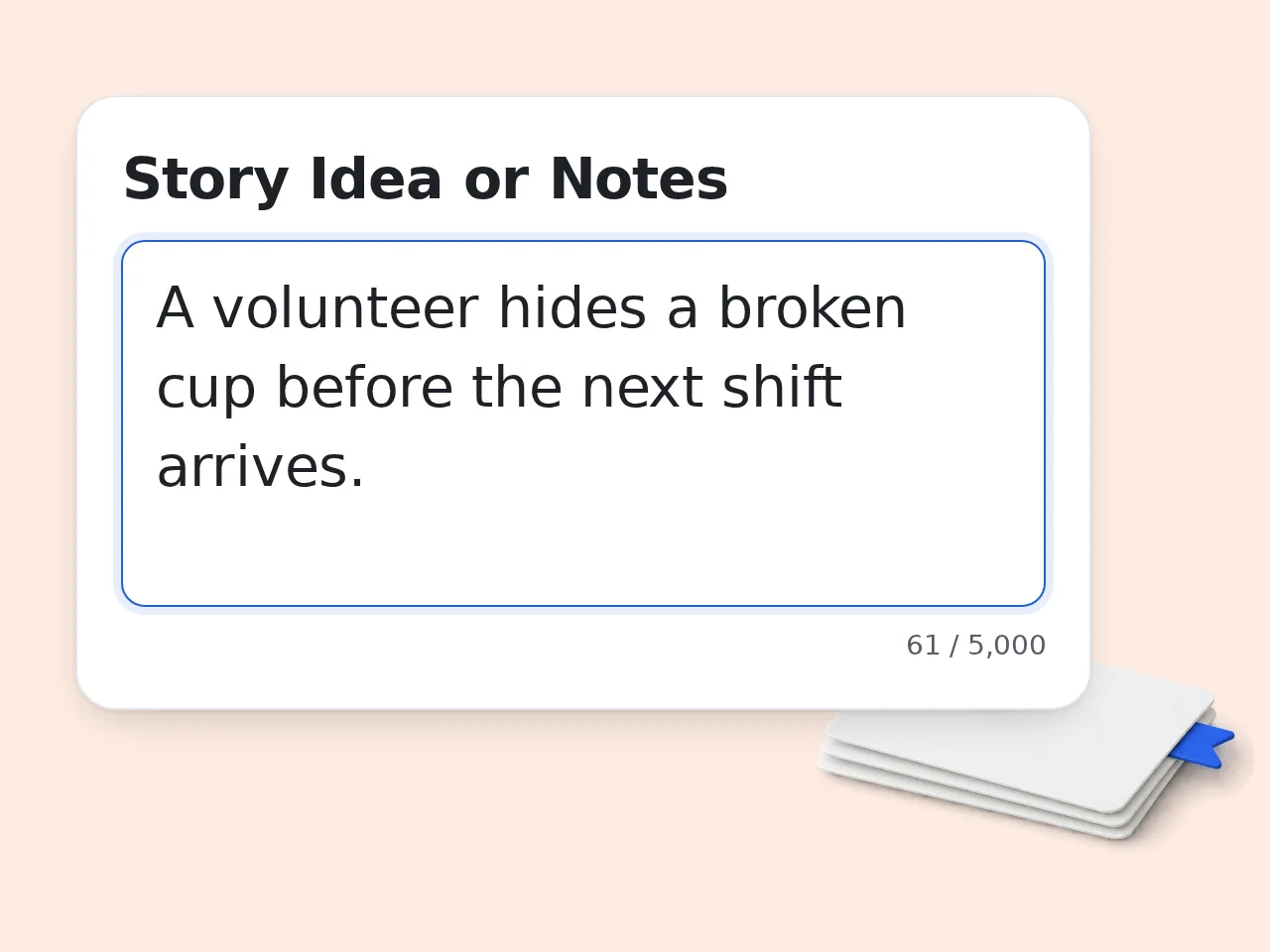
Add the Story Pressure
Paste a premise, rough notes, or partial plan. Name any line, clue, character, image, or final moment that the short story outline must protect.
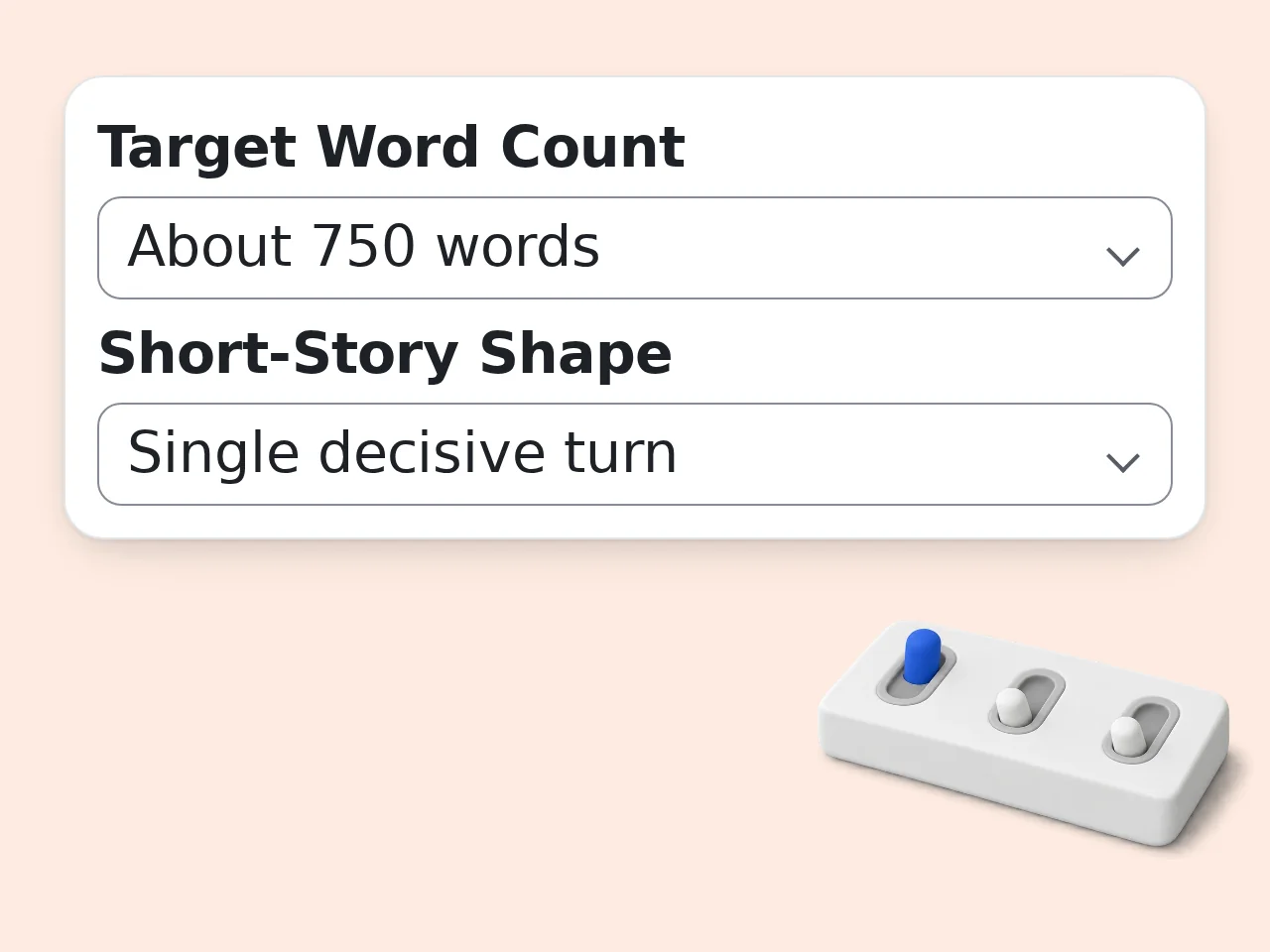
Set Space and Effect
Pick a target word count, short-fiction shape, ending effect, and current draft concern. These choices control scene count and the amount of room each turn receives.
Draft From the Budget
Generate the short story outline, read the compression audit, then draft in scene order. Recheck the allocated words when a scene starts absorbing another scene's job.
Short Story Outline Features for Tight Word Counts
Build a short fiction outline around space, change, and consequence
Scene-by-Scene Word Budget
Split 750 to 7,500 words across the opening, escalation, decisive turn, and ending. The allocations total your chosen length, so the short story outline can guide an actual draft.
Seven-Point Compression Audit
Check scene necessity, cast load, exposition, causal momentum, setup and payoff, pacing balance, and ending space. Weak scores receive a concrete cut, merge, or repair.
Ending-First Payoff Planning
Choose a resolved, resonant, surprising, unsettling, or open effect. The planner works backward to place only the clues and emotional setup that the ending needs.
Short Story Outline Questions
Practical answers about scenes, word budgets, endings, and revision
What is a short story outline and what should it include?
A short story outline is a compact plan that connects a character's pressure, choices, turning point, and ending within a limited word count. It should show what changes in each scene, not merely list events. A useful plan also assigns approximate words, marks setup and payoff, and identifies the story's central change. Keep the cast, locations, and subplots small enough that every element can earn space on the page. That makes the outline a working constraint, not a decorative summary.
How do I use this short story outline generator?
Paste your premise or notes, choose the target length, select a short-fiction shape and ending effect, then name anything that must remain. The generator returns four to eight scene cards plus a word budget and compression audit. Read the low scores before drafting because they expose likely pacing trouble. If the idea is still loose, use the stated assumptions as decisions to accept, change, or test. Save the result beside the draft so the budget remains visible.
Is the short story outline tool free to use?
Yes. The short story outline tool is free to try with included credits, and the credit badge shows the current cost before you run it. Guests receive 10 credits each day, while registered free users receive 100 credits each month. Subscribers receive more credits according to their plan. Because tools can cost different amounts, check your available balance instead of assuming a fixed number of outlines. This keeps the free policy accurate when costs or settings change.
How many free credits can I use for a short story outline?
Guests receive 10 free credits per day, and registered free users receive 100 free credits per month for tools including the short story outline planner. Subscribers receive a larger allowance based on the selected plan. Credits are not the same as a promised number of generations because each tool has its own cost. Review the credit badge and current balance before creating several versions of the same outline. One careful plan often produces better comparisons than many unfocused runs.
Can I create a short story outline without an account?
Yes. A guest can create a short story outline without registering by using the daily guest credit allowance. An account becomes useful when you want the monthly free-user credits and a more consistent return workflow. Keep your premise and generated plan in a document you control, especially before closing the page. Registration does not replace the need to save or review important creative work. A local copy also makes later revision easier to track.
How many scenes should a 3,000-word short story outline have?
Most 3,000-word stories work well with five or six purposeful scenes, though a continuous-time story may use fewer visible breaks. The stronger test is whether each scene changes knowledge, danger, commitment, leverage, or relationship. If two scenes perform the same job, merge them and give the decisive turn more space. A short story outline should reserve enough words after the climax to show its immediate consequence. The ending needs room to land, not just space for the final revelation.
What can I use a short story outline for?
Use a short story outline to plan flash fiction, contest entries, workshop drafts, classroom assignments, anthology submissions, or a focused standalone story. It is especially helpful when the premise feels larger than the allowed space or the ending keeps arriving too quickly. The scene cards can also test a draft you already started. Replace invented beats with existing material, then compare each scene's job against its actual word count. It can therefore support planning, diagnosis, and focused revision without writing the finished story.
How does a short fiction outline handle setup and payoff?
A short fiction outline places each necessary clue, image, promise, or emotional detail close enough to its payoff that readers can remember it without lengthy explanation. The ledger shows where an element is planted, where it returns, and what breaks if it disappears. For a twist, include at least two fair clues. For a resonant ending, repeat an earlier image with changed meaning rather than adding a final paragraph of explanation.
Why use this instead of the general Story Outline Builder?
Choose this planner when a fixed short-story word count is the main constraint. It caps the scene total, assigns words that add up to the target, measures cast and exposition load, and protects room for the ending. The general Story Outline Builder is better for cross-format causal planning and repairing disconnected events. A blank template is better when you want reusable fields rather than a filled plan based on your premise.
Can the planner help cut characters and subplots?
Yes. The compression audit checks whether each character and subplot changes the central choice enough to justify its words. Minor roles can be combined, implied, or moved offstage when they repeat information or pressure. A subplot should usually affect the climax or ending; otherwise it is a strong cut candidate. Keep a beloved element only when it performs more than one narrative job without confusing the reader. The tool names the overloaded roles so you can see exactly what each cut buys.
How can I improve a weak short story plot outline?
Start by checking the exit state of every scene. If the character leaves with the same knowledge, danger, commitment, leverage, and relationship they entered with, that scene probably needs a turn or removal. Then inspect the causal bridges: each new scene should occur because of the previous choice or consequence. Finally, rebalance the short story plot outline so setup does not crowd out the climax and its aftermath. A stronger exit state usually fixes pacing more effectively than adding another event.
What if the generated short story outline feels too predictable?
Keep the causal structure and change the source, cost, or meaning of the decisive turn rather than adding random events. A surprise feels earned when earlier details support it while pointing toward another reasonable reading. Try changing what the protagonist wants, what they misunderstand, or what success costs them. Then regenerate or revise the setup-payoff ledger so every clue still serves the new ending without announcing it too early. Judge the revision by whether the ending now feels both unexpected and inevitable.
Still have questions?
Contact our support teamBuild a Short Story Outline That Fits
Turn your premise into lean scene cards, a complete word budget, and clear cuts before drafting.