ACS Citation Generator
Create ACS citations for chemistry papers from URLs, DOIs, books, articles, and source notes
How to Use the ACS Citation Generator
Create an ACS reference in 3 simple steps
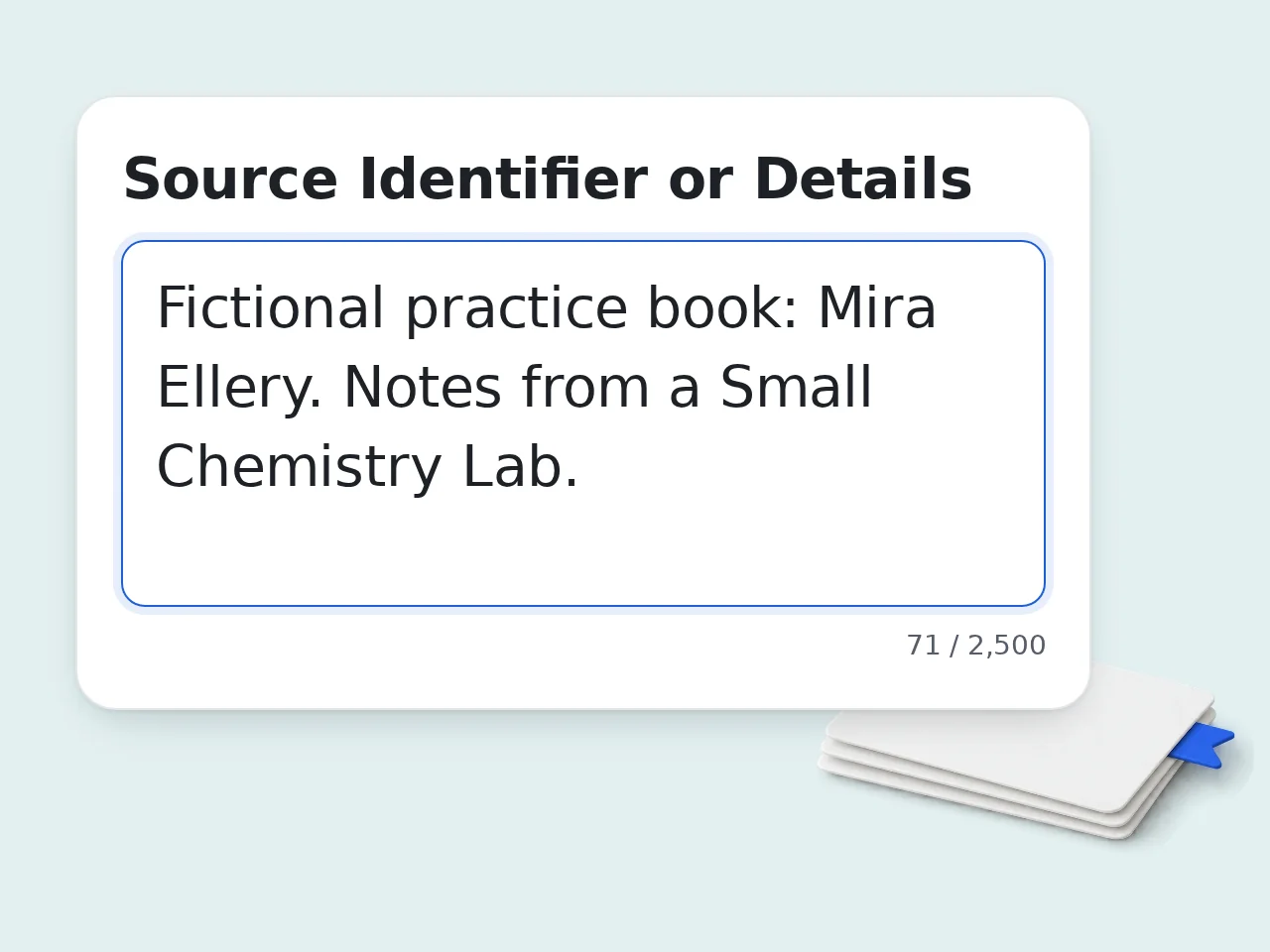
Enter the source
Paste a DOI, URL, ISBN, title, or manual source details into the ACS citation generator.
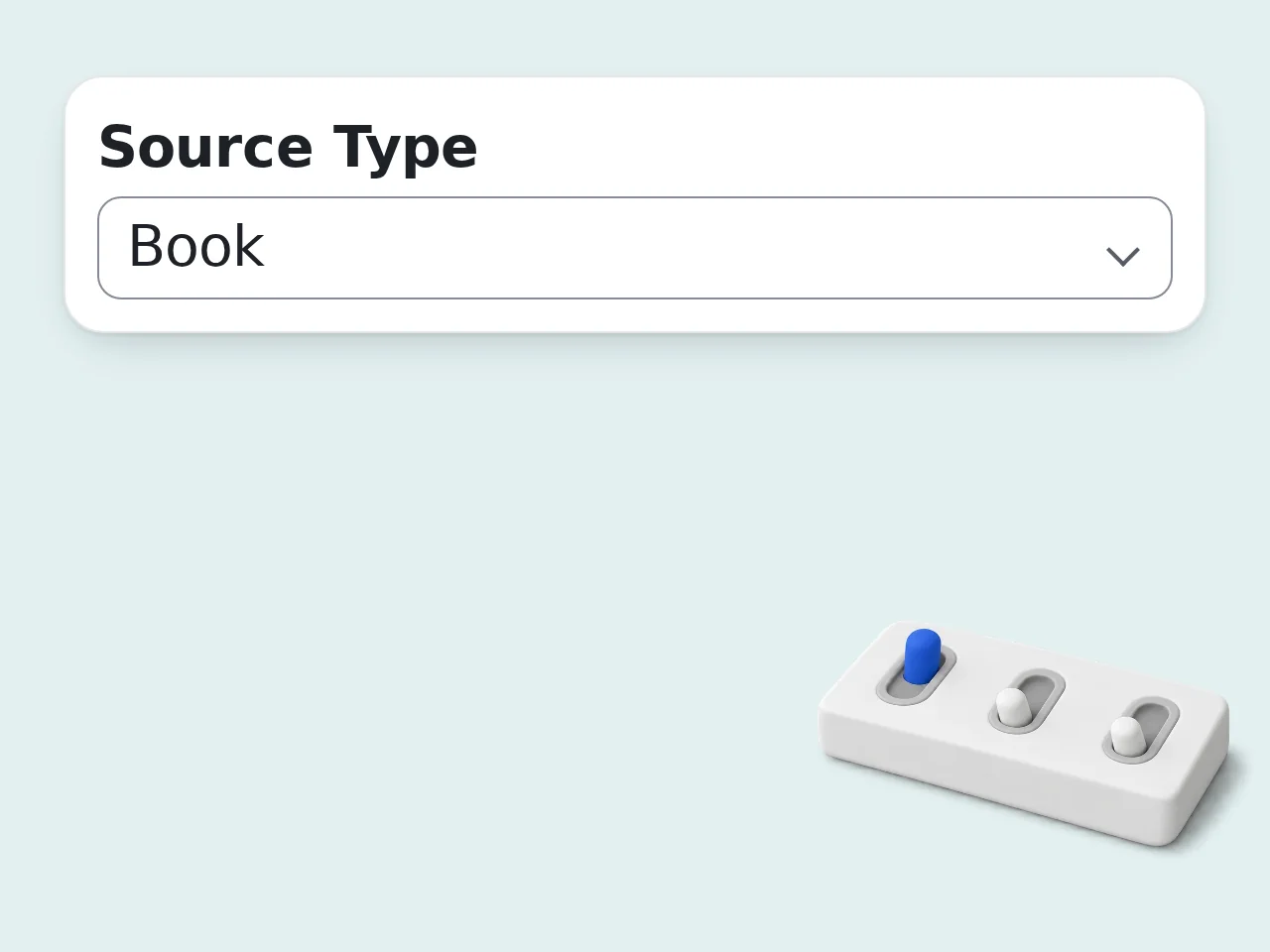
Choose ACS settings
Select source type, numbered or author-date guidance, and the output format you need.
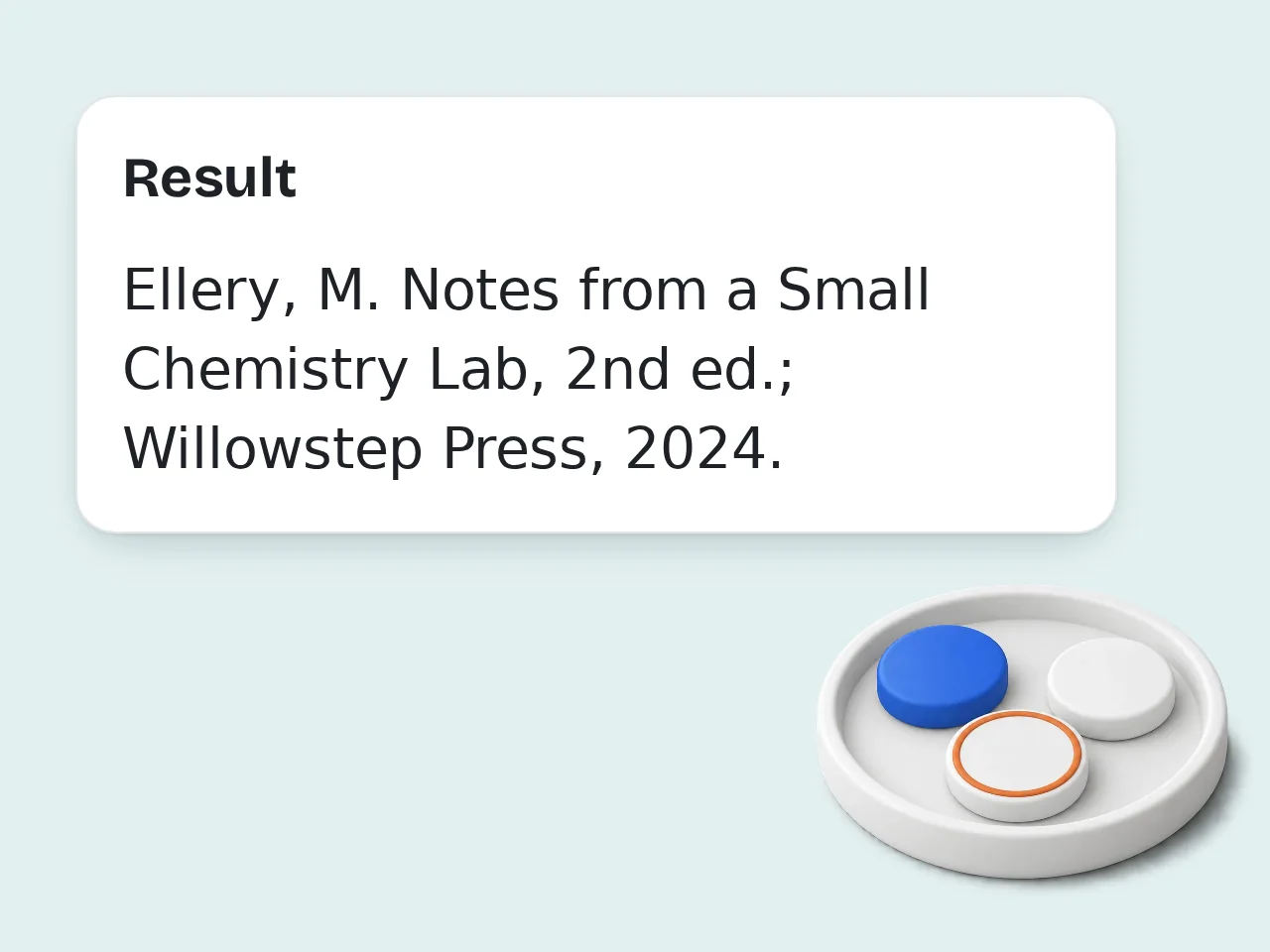
Copy and review
Copy the ACS reference, check missing fields, and place citations in the order required by your paper.
Key Features of ACS Citation Generator
Fast ACS citation help for chemistry sources and reference lists
DOI, URL, and ISBN Input
Create ACS citations from common identifiers or paste manual source details when metadata is incomplete.
Numbered ACS Citation Support
Generate reference list entries with superscript, parenthetical, or author-date citation guidance.
Copy-Ready Reference Output
Get clean bibliography text, review notes, and optional BibTeX-style structure for easy editing.
Frequently Asked Questions about ACS Citation Generator
Clear answers about ACS references, in-text citations, and source formats
What is an ACS citation generator?
An ACS citation generator formats source details into American Chemical Society references for chemistry writing. It helps create numbered reference list entries, in-text citation notes, and clean bibliography text from DOI, URL, ISBN, title, or manual source information. ACS style is common in chemistry courses, lab reports, and research papers. The tool checks source type, author order, journal title, year, volume, pages, DOI, and access date when relevant. Always compare important references with your instructor guide. Citation rules can vary by course, journal, or ACS edition.
How do I use this ACS citation generator?
Paste a DOI, URL, ISBN, article title, or source details, then choose the source type and citation system. The ACS citation generator returns a formatted reference plus in-text citation guidance you can copy into your paper. For best results, include authors, title, journal or publisher, year, volume, issue, pages, DOI, and access date for web sources. More complete input means fewer corrections. Review names, capitalization, and page ranges before submitting. Automated citation tools still need a quick human check.
Is this ACS citation generator free to use?
Yes, this ACS citation generator is free to try. Guests get limited daily free tries without an account, free registered users have a monthly credit allowance, and subscribers have higher limits. The main citation settings are available on the free tier, including source type, citation system, output format, and in-text citation notes. No payment is required for basic references. If you cite many sources for a thesis or literature review, signing in helps preserve a steadier monthly allowance. See the pricing page for current details.
How many ACS citations can I generate per day?
Guests get limited daily free tries to generate ACS citations. Free registered users have a monthly credit allowance, while subscribers receive higher limits for larger assignments, research projects, and repeated editing. Each generation can handle one source or a small batch of clearly separated sources, depending on your input. Very long pasted bibliographies may need to be split. For a full reference list, work source by source. That keeps the ACS citation generator more accurate and easier to review. See the pricing page for current details.
Can I use the ACS citation generator without an account?
Yes, you can use the ACS citation generator without creating an account for quick references. Guest access is meant for occasional citations, checking a DOI, or formatting one source before a deadline. Creating a free account gives a larger monthly limit and a more stable workflow if you cite sources often. It is helpful for chemistry students working on several assignments. If you only need one or two ACS references, guest access is usually enough.
What source types does the ACS reference generator support?
The ACS reference generator supports common chemistry sources: journal articles, books, book chapters, websites, reports, theses, patents, datasets, conference papers, and manual source notes. You can also choose auto-detect when you are unsure. Journal articles usually need authors, article title, abbreviated journal title, year, volume, issue, pages, and DOI. Websites need page title, organization, URL, and access date. When a source is unusual, choose Manual and describe it clearly so the output can explain any assumptions.
Does ACS use superscript numbers or author-date citations?
ACS can use numbered citations or author-date citations, but many chemistry assignments use numbered references. The ACS citation generator lets you choose superscript numbers, italic parenthetical numbers, or author-date guidance. Your instructor, lab manual, or target journal decides which system to follow. Numbered ACS references are ordered by first appearance, while author-date lists are arranged alphabetically. Check the required system before formatting the final paper. Mixing systems is one of the easiest citation mistakes to catch.
Why use an ACS citation generator instead of formatting manually?
Using an ACS citation generator is faster than checking punctuation, author initials, journal abbreviations, page ranges, and DOI placement by hand. It reduces repetitive formatting work so you can focus on the chemistry argument. Manual formatting is still useful for final review, especially when source metadata is missing or a professor gives custom rules. The tool handles the first structured draft. Use the generated citation as a clean starting point, not as an excuse to skip proofreading.
How is this different from asking ChatGPT for ACS citations?
This ACS citation generator asks for citation-specific fields first, so the output is more structured than a general chat prompt. It separates source type, citation system, output format, and missing-data notes before writing the reference. General AI chat can format citations, but it may guess missing metadata if the prompt is vague. This tool is designed to flag gaps and show review notes. Use DOI or URL input whenever possible. Verifiable identifiers improve the result more than a broad instruction.
Can the tool create ACS in-text citations too?
Yes, the tool can include ACS in-text citation guidance with the reference list entry. You can request superscript numbers, italic numbers in parentheses, or author-date notes depending on your course requirement. For numbered ACS style, each source keeps the same number every time it appears. Multiple sources at the same point should be listed in a clear sequence. After generating, make sure the numbering matches the order of first use in your final paper.
How can I get better ACS citation results?
Better ACS citation results come from complete source data. Add the DOI, full author list, article title, journal title, year, volume, issue, page range, publisher, URL, and access date when available. If you paste only a title, the tool may need to state assumptions or provide a partial reference. That is normal when metadata cannot be confirmed. For chemistry journals, double-check abbreviated journal names. Journal abbreviation rules are a common source of small ACS errors.
What if the ACS citation output looks wrong?
If the ACS citation output looks wrong, regenerate with more complete source details and choose the exact source type. Missing authors, unclear web pages, incomplete DOIs, and copied database snippets often cause formatting problems. Compare the result with your course guide, ACS examples, or the journal instructions. Pay attention to punctuation, italics, journal abbreviation, reference order, and access dates. When in doubt, keep the generated version as a draft and manually correct the uncertain fields before submission.
Still have questions?
Contact our support teamReady to Format Your ACS Citations?
Generate chemistry references before you submit the paper.